
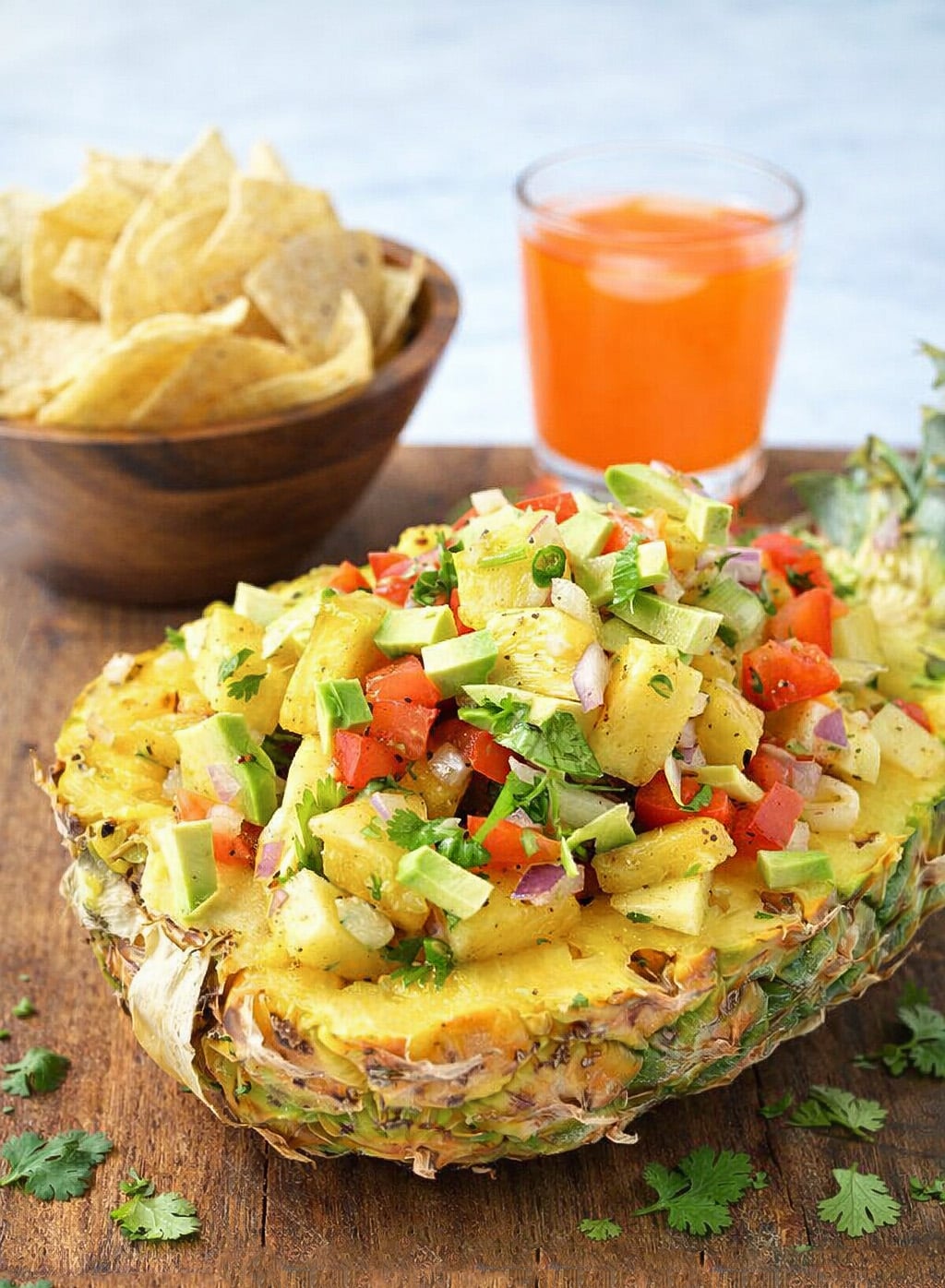
If you are looking for a bright, juicy, crowd-pleasing appetizer, this fresh pineapple salsa recipe is the one to make. It is sweet, tangy, colorful, lightly spicy, and packed with fresh ingredients that come together in minutes. Every bite is loaded with juicy pineapple, ripe tomatoes, crisp bell peppers, onion, cilantro, creamy avocado, and a citrusy kick from fresh lemon juice.

What is Pineapple Salsa Recipe?
This homemade pineapple salsa is one of those recipes that instantly makes a table feel festive. It is a perfect crowd-pleasing appetizer for taco nights, backyard barbecues, gatherings, game-day snacking, or whenever you want something fresh and exciting without much effort.
Serve it with tortilla chips, spoon it over grilled fish or chicken, pile it onto tacos, or enjoy it as a refreshing side dish.
Reasons You’ll ♡ Pineapple Salsa Recipe
Whether you are hosting guests or just making a quick snack for yourself, this recipe is easy enough for everyday use and beautiful enough for summer entertaining.
- Fresh and vibrant — Loaded with fresh produce, bright colors, and bold flavor.
- No cooking needed — Just chop, mix, and serve.
- Sweet, tangy, spicy, and savory — A delicious balance of flavors in every bite.
- Versatile — Serve it as a dip, topping, or side with tacos, grilled meats, seafood, and bowls.
-
Naturally gluten-free —Made with fresh, wholesome ingredients.
-
Easy to customize — Make it mild, spicy, chunky, or extra citrusy.
-
Beautiful presentation — Colorful, fresh, and just as pretty as it is tasty.
What is pineapple salsa made of?
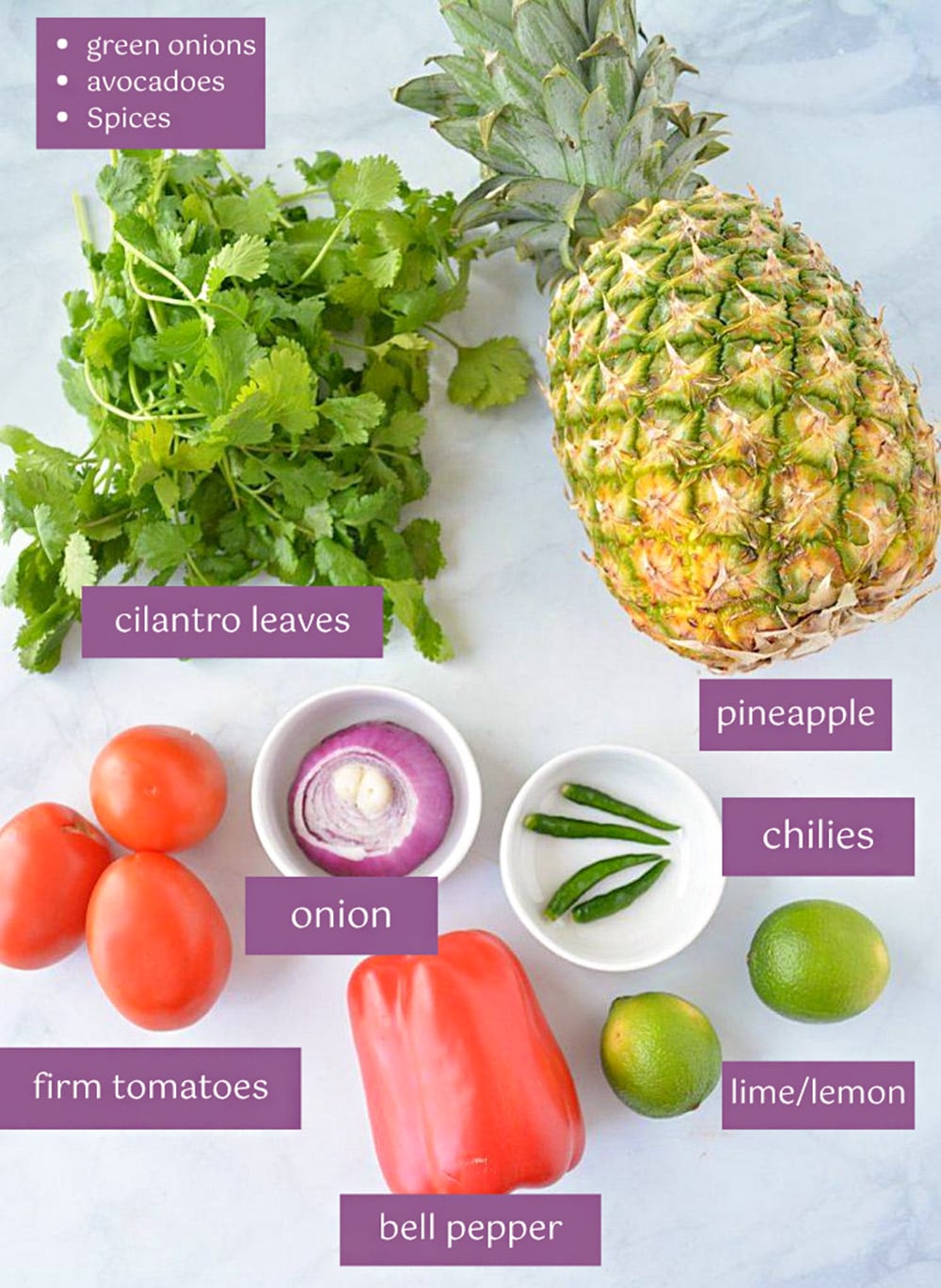
Pineapple — is the star of this recipe, so choose a ripe, sweet one for the best flavor.
Onion — Finely chopped onion adds sharpness and crunch that balances the sweetness of the pineapple. You can use red onion for a stronger flavor and pretty color, or white onion for a slightly cleaner, classic salsa taste.
Tomatoes — add juiciness, freshness, and body to the salsa. Choose ripe but firm tomatoes so they hold their shape after chopping.
Green Chili — adds heat and a fresh spicy kick. This ingredient is optional, so you can adjust it based on your spice preference. Use less for mild salsa or more for a bolder, hotter version.
Lemons — Fresh lemon juice brightens the entire pineapple salsa recipe and enhances every flavor. It also helps keep the avocado looking fresh for longer. Always use freshly squeezed lemon juice for the best taste.
Bell Pepper — adds crunch, sweetness, and color. Red, yellow, and orange peppers are sweeter, while green bell pepper gives a slightly earthier bite. Any one color works, or use a mix for a more colorful presentation.
Cilantro Leaves — gives the salsa a fresh, herby flavor that pairs beautifully with pineapple and citrus. Chop it just before using for maximum freshness.
Green Onions — add a milder onion flavor and a little brightness without being too pungent. They also give the salsa a lovely pop of green.
Avocado — adds creaminess and richness that makes the salsa even more satisfying.
Cumin Seeds — Crushed roasted cumin seeds give this salsa a subtle, smoky, earthy warmth that deepens the flavor beautifully.
Black Peppercorns — add mild heat and sharp depth that complements the fruitiness of the salsa. Coarsely crushed pepper works better than fine powder because it gives texture and a bolder flavor.
Recipe Tips and Variations
A good pineapple salsa is all about balance, freshness, texture, and timing. Since this is a no-cook recipe, every ingredient matters, and even a few small adjustments can make a big difference in the final taste. These tips will help you make a pineapple salsa that tastes fresh, vibrant, and restaurant-worthy every single time.
Choose a ripe pineapple for the sweetest flavor — Since pineapple is the main ingredient, its ripeness will directly affect the taste of your salsa. A ripe pineapple should smell sweet near the base, have a slight give when pressed, and show some golden-yellow color on the outside. Avoid underripe pineapple as it can taste too tart and fibrous. An overripe pineapple, on the other hand, may become too mushy and watery when chopped.
Fresh pineapple always works best — It gives the pineapple salsa recipe the best texture, flavor, and natural juiciness. Canned pineapple can work in a pinch, but it tends to be softer and sweeter, and it may make the salsa overly wet. If using canned pineapple, be sure to drain it very well and pat it dry before chopping.
Use firm tomatoes, not overly ripe ones — Tomatoes add freshness and color, but if they are too soft or watery, they can thin out the salsa too much. Use ripe but firm tomatoes that hold their shape after chopping. Roma tomatoes are a great choice because they are meatier and less watery than other varieties.
Soak the onion if you want a milder taste — If raw onion feels too strong for your taste, soak the chopped onion in cold water for 5 to 10 minutes, then drain it well. This softens its harsh edge while keeping the crunch.
Is pineapple salsa spicy?— The green chili is optional, so you can make the salsa as mild or as spicy as you like. For a kid-friendly version, leave it out completely. For a spicy batch, keep the seeds or add an extra chili. Always taste as you go.
Use ripe but firm avocado — A perfectly ripe avocado should be creamy but still hold its shape when diced. If the avocado is too soft, it will mash into the salsa. If it is underripe, it will taste bland and feel too firm.
Taste the lemon before adding all of it — Some lemons are more tart than others, so start with less juice and add more as needed. You want enough citrus to brighten the pineapple salsa recipe without overpowering its sweetness.
Roast the cumin seeds for better flavor — Roasted cumin brings a warm, earthy depth that makes this pineapple salsa recipe extra special. Toast the cumin seeds in a dry pan over low heat until aromatic, then cool and crush them. This adds a nutty, smoky complexity you do not get from raw cumin.
Salt is essential for balancing the sweetness — Do not skip the salt. Pineapple is naturally sweet, so salt helps balance its sweetness and brings out the savory, citrusy, and spicy elements in the salsa. Add it little by little and taste after each addition.
Do not let it sit too long if avocado is mixed in — If avocado is already added, serve the salsa within a short time for the best color and texture. The longer it sits, the softer the avocado becomes.
Drain off excess liquid before serving if needed — If the salsa releases too much juice as it sits, simply spoon off a bit of the extra liquid before serving. This keeps it chunky and easier to scoop.
Use a non-reactive bowl — Glass or ceramic bowls are best for mixing salsa with citrus juice. These materials help keep the flavors clean and fresh.
What are the best variations of pineapple salsa? Popular variations include adding mango, cucumber, corn, jalapeño, mint, lime juice, black beans, grilled pineapple, or pomegranate seeds.
Can pineapple salsa be healthy? Yes, pineapple salsa is made with fresh fruit, vegetables, herbs, and simple seasonings. It is light, colorful, and nutrient-rich, making it a wholesome snack or topping.
Can beginners make pineapple salsa easily at home? Yes, pineapple salsa is very beginner-friendly. It does not require cooking, and the recipe mainly involves chopping, mixing, tasting, and adjusting seasoning.
Why do avocado and pineapple work so well together in salsa? Pineapple brings juicy sweetness and acidity, while avocado adds creamy richness. Together they create a contrast of texture and flavor that makes the salsa more satisfying.
What makes homemade pineapple salsa taste better than store-bought? Homemade pineapple salsa tastes fresher because it uses real ripe fruit, freshly chopped vegetables, herbs, and citrus juice. You can also adjust the spice, salt, and acidity exactly to your taste.
How do you make pineapple salsa taste balanced and not too sweet? To keep pineapple salsa balanced, combine the sweetness of pineapple with enough onion, tomato, lemon juice, salt, black pepper, and optional chili. Roasted cumin also adds earthy depth that helps round out the sweetness.
What to serve alongside this Pineapple Salsa Recipe? This pineapple salsa is incredibly versatile. Serve it:
- With tortilla chips as an appetizer
- Over tacos, nachos, or burrito bowls
- Alongside grilled chicken, shrimp, or fish
- With roasted vegetables or paneer
- Rice bowls, salads, lettuce wraps, or crostini
- As a fresh side for summer barbecues
- Over avocado toast for a fruity-spicy topping
- In lettuce cups for a light snack
- With crackers or toasted crostini for entertaining.
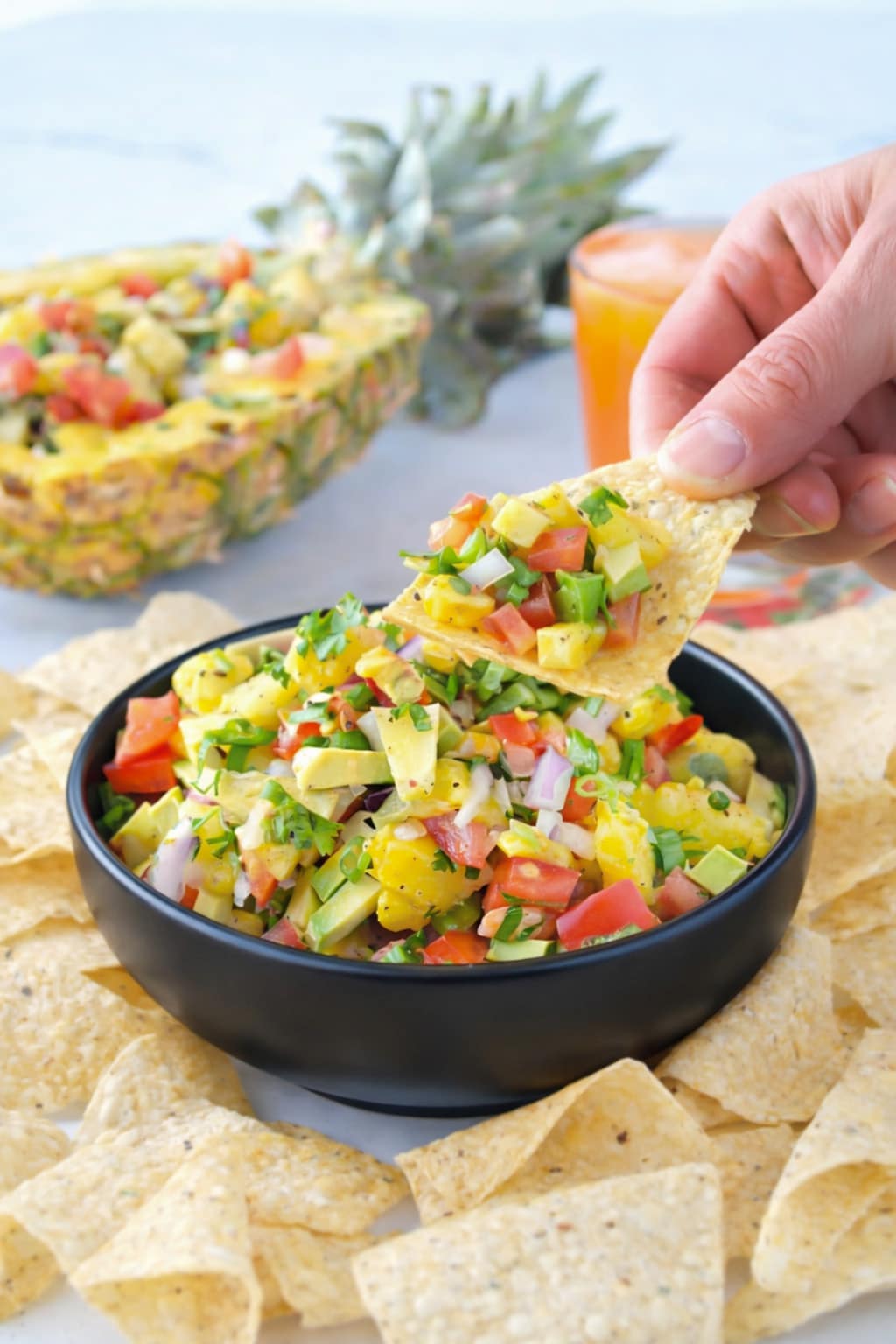
Let me know what you think!
This pineapple salsa recipe is one of those simple dishes that delivers big flavor with minimal effort. It is fresh, juicy, colorful, and endlessly versatile. Whether you serve it as a dip, topping, or side dish, it adds a bright tropical twist to any meal.
With sweet pineapple, crunchy vegetables, creamy avocado, fresh herbs, and bold seasoning, every bite is lively and delicious. Make it once, and it may quickly become one of your favorite warm-weather recipes.
Should you make this recipe or any other variations of it, please let me know your thoughts by sharing your comment below.
And don’t forget to share it with your family and friends.
CRAVING FOR MORE, TRY MY OTHER FINGER FOOD RECIPES –
Pineapple Salsa Recipe
INGREDIENTS
- 1 full Pineapple
- 3 tablespoons Onion finely chopped
- 2 medium Tomatoes diced
- 3 small Green Chilies
- 2 small Lemons
- 1 medium Red Bell pepper any color would work
- 3 tablespoons Cilantro leaves
- 2 stalks Chopped Green Onions
- 1 small Avocado
- – – salt to taste
- ½ teaspoon Roasted cumin seeds
- ½ teaspoon Coarsely crushed black peppercorns adjust according to taste
INSTRUCTIONS
- Cut the pineapple in half.

- Run a knife all around the edges and scoop out the pulp. Cut each half into small, even cubes. Smaller chunks make the salsa easier to scoop with chips and help all the flavors mix more evenly. Large pieces can make the salsa feel bulky and difficult to eat.Tip — The core of the pineapple is too tough and fibrous for salsa. Make sure to remove it completely before dicing the fruit. This keeps the final texture tender, juicy, and pleasant.

- Get the ingredients ready to assemble. Onions — Chop them very finely so they blend into the salsa without overpowering the other ingredients.Tomatoes — Remove excess seeds if your tomatoes are very watery to help keep the salsa from becoming too runny.

- Cut and dice all the other veggies.

- Combine everything in a big bowl.

- Season the salsa. Once all the ingredients are in the bowl, gently fold them; do not stir aggressively. This is especially important after adding avocado. A light hand helps maintain the chunky, colorful appearance.

- Pour in freshly squeezed lemon juice. Freshly squeezed lemon juice brightens all the ingredients and ties the salsa together. It also helps prevent the avocado from browning too quickly. Tip — Bottled lemon juice does not have the same clean, fresh flavor, so fresh is always best here.

- Use coarsely crushed black pepper for textureTip — Coarsely crushed black pepper adds gentle heat and a bit of texture, working beautifully with the juicy pineapple and creamy avocado. It tastes fresher and bolder than pre-ground pepper.

- Add avocado at the very end. Avocado adds richness and creaminess to the salsa, but it is delicate. Fold it in gently just before serving so it keeps its shape and does not turn mushy. Tip — If making the salsa in advance, add the avocado right before serving for the freshest look and texture.

- Chill lightly for the freshest bite. Pineapple salsa tastes especially refreshing when slightly chilled. A short rest (for an hour) in the refrigerator can make it even better, especially on warm days. Tip — Do not overchill it for hours, though, as the texture can become watery.
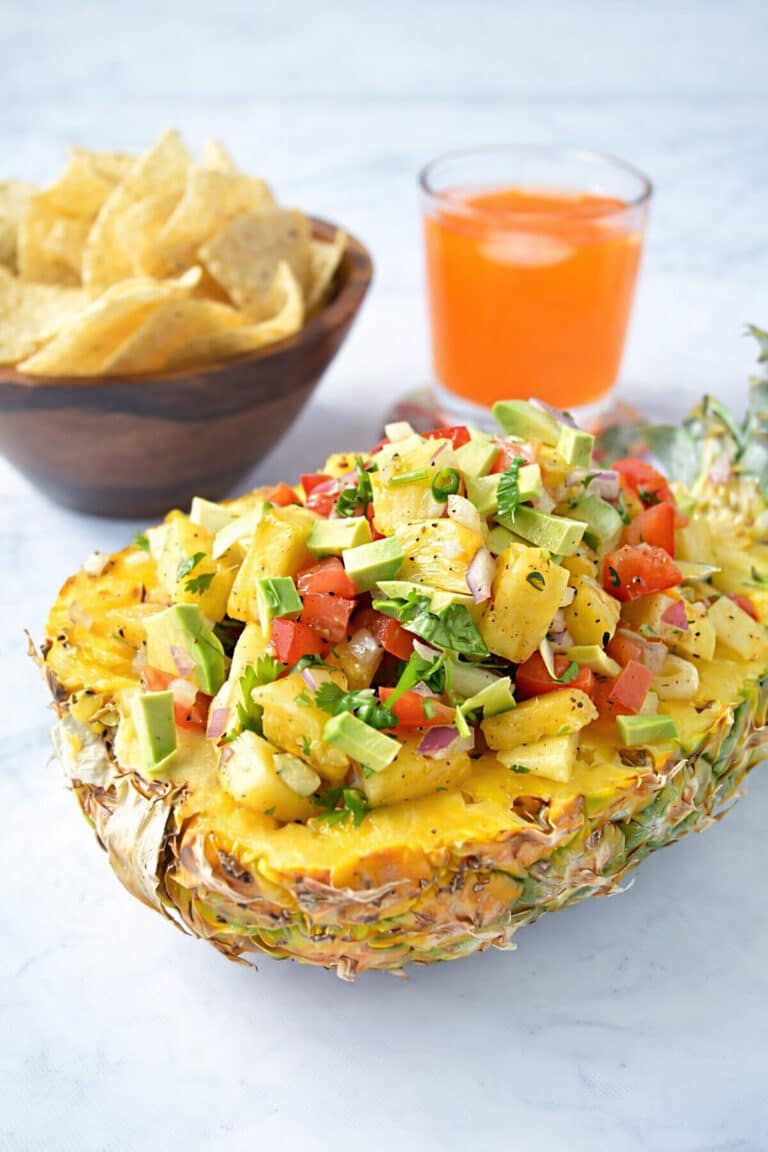
- Since pineapple salsa is juicy and chunky, sturdy chips work best. Thin chips can break easily when scooping.
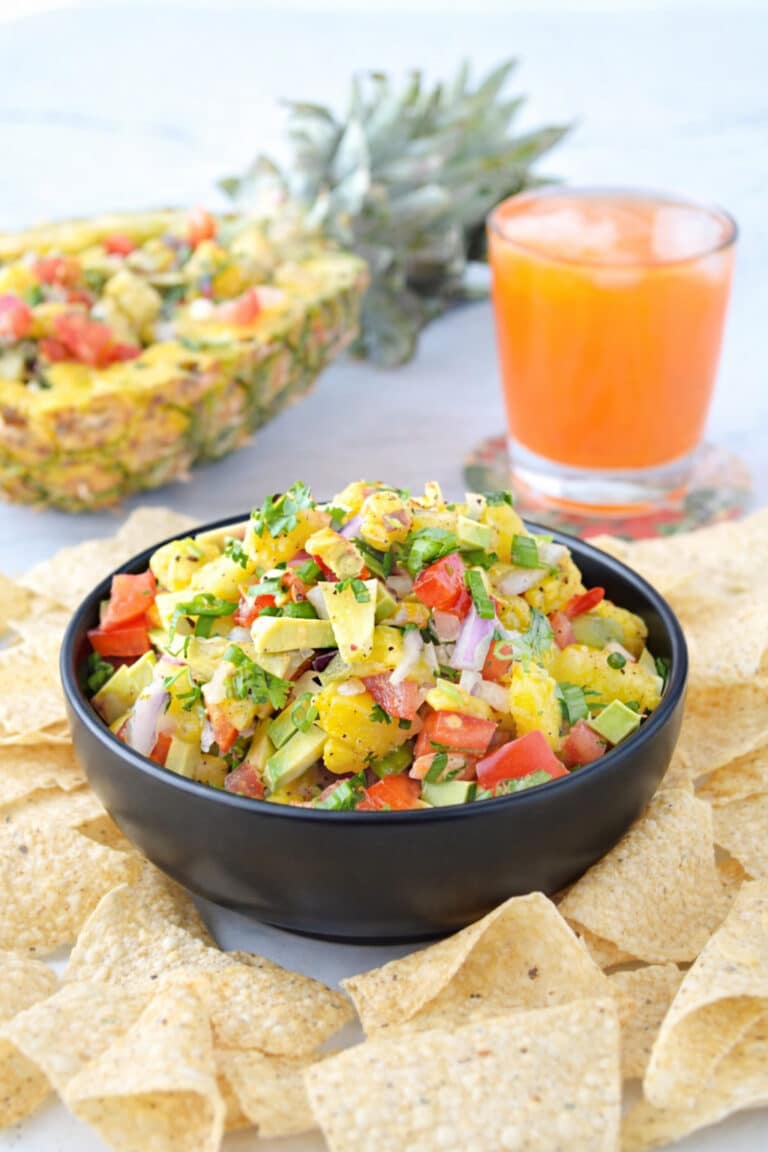
This is totaly relish….
Thanks Shibani. 🙂