
Gajar Gobhi Shalgam Achar


A sweet and spicy Gajar Gobhi Shalgam Achar made with seasonal vegetables and aromatic spices is THE quintessential winter favorite! This Punjabi achar is a great accompaniment to breakfast, lunch, or dinner.
Or you can eat it as is straight out of the jar - it's that good!

Winter brings its own favorites, and this Gajar gobhi shalgam achar recipe is one of my family favorites that I always make a jar-full of in the winter.
Why in winter? Because that's the season when carrots, turnips, and cauliflower begins to flood the market. Wherever you look, the local vegetable markets are overflowing with red, orange, and dark-purple carrots. It's a rare sight!
Red carrots are commonly used for gajar ka halwa and gajar gobhi shalgam ka achar. Dark-purple carrots are turned into a delicious winter drink - kanji. It's absolutely yummy! Just the thought of it makes my taste buds tickled.
What is Gajar Gobhi Shalgam Achar?
In this term, Gajar Gobhi Shalgam Achar - gajar is carrots, gobhi/gobi is cauliflower, shalgam is turnips, and achar translates pickle in English.
Achar is an essential part of Indian food. Whether it be paneer paratha, Aloo poori, or Pindi chole, Indians love their food with achar. Achar brightens up any meal you add it to.
Indian pickles are prepared with various spices and vinegar and are oil-based. The process of letting the pickle sit in the oil and vinegar mix preserves the pickle well for at least a year (if stored well).
Today, I am sharing with you my mom's recipe that my family has relished for years. We are a pickle-eating family, and I grew up eating this Punjabi Gobhi shalgam ka achaar with Makki ki roti and Sarson ka saag.

Ingredients for Gajar Gobhi Shalgam Achar
Mixed vegetables — The main vegetables for this Punjabi pickle are cauliflower florets, carrots, and turnips.
Beetroot — Since this pickle is made with red carrots and red carrots are not available in our area, I prefer to add beets to my pickle, and believe me, as this achar ages, beets add deep rich color to the veggies. But again, it's optional.
Vinegar — white distilled vinegar works well. It is used as a preservative, therefore, do not omit it.
Ginger + Garlic — Use fresh as they add tons of flavor to this gajar achar.
Jaggery — it adds a sweet touch to our sweet and spicy gobi gajar shalgam achaar. In addition to that, it balances the heat from all the spices.
Mustard oil — it preserves the pickle from going rancid and keeps it fresh and edible at all times. In addition to that, mustard oil (Sarson ka tel) lends this achar its unique taste and flavor.
Spices — here comes our flavor quotient in the form of spices. Gajar Gobhi Shalgam ka Achar uses a lot of spices such as Kashmiri red chili powder, black cardamom, cinnamon powder, cloves, Haldi (Turmeric powder), Rock Salt (Kala namak), garam masala powder, mustard seeds, fennel seeds, nigella seeds, fenugreek seeds, and salt.

How to make Gajar Gobhi Shalgam Achar?
Step: 1- Blanch the vegetables — Remove the cauliflower's large stem end and cut it into large florets or as needed for the recipe. Set aside. Likewise, cut the green ends of carrots, beetroot, and turnips and peel the upper layer.
Wash the vegetables thoroughly under tap water to get rid of any dirt stuck to them. Cut the carrots and turnip into half vertically.
Now fill a large stockpot ⅔ with and bring it to a boil. Add the cauliflower florets to the boiling water. Boil the cauliflower in water for 2-3 minutes (depending on the size of your florets).
Immediately scoop out the cauliflower florets and cool them instantly in an ice water bath. Repeat the same process for carrots and turnips. Beetroot doesn't need to be blanched.
PROTIP — If using whole baby carrots, boil the carrots for 4-5 minutes.


Step: 2 - Dry the vegetables — Here comes the important and most essential step to make Gajar Gobhi Shalgam ka Achar - drying the vegetables in the sun. Once the vegetables have been blanched, remove them from the ice bath, drain and spread them on a clean paper towel or kitchen napkin.
Allow the vegetables to dry in the sun for a whole day. It took me a full day to dry my veggies. In the absence of the sun, you can dry the vegetables under a ceiling fan.
PROTIP — Please make sure the veggies are completely dried before adding spices to them. Achar can get moldy if there is moisture left in the veggies.


Step: 3 - Dry-roast the Pickle spices —
The next step is to dry roast the spices. Dry roasting brings out the magical aroma and flavorful oils of these spices.
To dry-roast - add red chili flakes, fenugreek seeds (methi dana), mustard seeds, fennel seeds, cumin seeds, nigella seeds, and cloves to a skillet. Over medium-low heat, toast the spices, stirring and tossing frequently, until fragrant and slightly brown.
Remove from heat and allow it to cool. Transfer the cooled spices to a blender or motor pestle. For a bold and impactful flavor, coarsely grind the spices.
PROTIP — Dry-roast the spices slowly over medium-low heat. Do not rush through the process, as the spices will burn. The goal is to roast them through, not just on the surface, without burning them.

Step: 4- Prepare the pickling syrup —
Combine vinegar and jaggery in a small heavy pan. Whisk to combine. Bring the jaggery syrup to a boil. Stir in freshly ground black cardamom and the pickling spice to this mixture.
Mix it well until combined. Boil the syrup until it forms a thick 1-string consistency. Set aside to cool.

Step: 5- Assemble Gajar Gobhi Shalgam ka Achar —
Heat mustard oil in a heavy pan. Cook until it starts to fume. Remove from heat once it starts to fume and set it aside to cool slightly.
Once cooled, add ginger-garlic paste to it. Sauté until the ginger-garlic mix becomes slightly brown. The goal is to cook the raw smell of ginger and garlic. It will take about 12-14 minutes on a medium-low flame.
Once cooked, take it off the flame and set it aside.
PROTIP — Do not cook ginger-garlic paste on high heat as it will burn and impart a bitter taste to our gajar gobhi shalgam ka achar.

Transfer the vegetables to a large mixing bowl. Now, add the vinegar+jaggery+spice mix to the vegetables.

Next, add the cooked ginger-garlic paste to gobhi, gajar, shalgam, and beetroot.

Followed by Kashmiri red chili powder.

Add cinnamon powder.

Time to add salt.

Use a clean spoon and toss everything together until everything is well blended.
Do not transfer the gajar gobhi shalgam ka achar to a jar as yet; allow the pickle to cool completely. Cover the pickle bowl with a kitchen towel and let it cool.


Once completely cooled, transfer the pickle to a clean, sterilized, dry jar.
Cover the jar tightly with a lid. Place the jar in the sun to mature. It will take at least 2-3 days at room temperature for the gobhi gajar shalgam achar to mature.

This is how the pickle looks after 4-5 days.

Recipe tips to make the BEST Gajar Gobhi Shalgam Achar
Cut the vegetables — For this gobhi gajar shalgam achar, cut the vegetables thick. Cut gobhi into 1-inch florets, and cut turnip vertically into ½-inch-thick. If using baby carrots, then you are all set; add them to the pickle as is.
Blanch the vegetables — Blanching locks in the flavor and freshness of these veggies and cooks them slightly. Therefore do not skip this process.
Dry the vegetables — Make sure the vegetables are dried before you add them to the pickle. If there is moisture in the vegetables, the pickle will get moldy.
Long shelf life — Gobhi gajar shalgam ka meetha achar has a long shelf life because of sodium, vinegar, and oil, which help preserve the pickle for a longer time. Cutting back on any of these ingredients may spoil the achar.
Jar selection — Choose the jar that has a secure lid. The jar should seal so tightly that air can hardly escape from the pickle jar. This will prevent the achar from going bad.
Let the achar mature — Place the gobhi gajar shalgam achar jar in direct sunlight to let it ferment properly. The more the achar matures, the better it tastes.
Other options — To add a spicy touch to Gajar Gobhi and Shalgam pickle, you can slit the green chilies and add them to the achar.
To preserve the achar for a long time — Gobhi gajar shalgam achar should always be submerged in mustard oil.

My achar turned black in color!
The reasons why Gajar Gobhi Shalgam ka Achar can turn black in color are-
- Jaggery - if a darker shade of jaggery is used to make the pickle, you will end up with a dark brown colored achar.
- Adding ground spices to the jaggery-sugar mix can result in a darker shade of pickle.
- Storage container - If the gobhi gajar shalgam achar is stored in a container with a metal lid, it can turn dark because of the lid's corrosion by vinegar.
- Traces of water on the storage container or the ingredients can result in white fungus formation, resulting in a darker sour-smelling pickle.
Storage!
Gajar Gobhi Shalgam ka Achar has a long shelf life if stored in a sealed jar at room temperature. This achar will keep well for 3-4 months. That's the time it will be at its peak taste and flavor.
Serving suggestions!
Crunchy and tangy, with a subtle hint of sweetness from jaggery, this gobhi gajar shalgam achar tastes great with just about anything.
I'll be honest; I enjoy eating this achar with everything savory such as-.

Let Me Know What You Think!
Should you make this delicious Gajar Gobhi Shalgam Achar, please let me know your thoughts by sharing your comment below.
And don’t forget to share it with your family and friends.
CRAVING FOR MORE? TRY THESE OTHER WINTER DELICACIES!
| This recipe post has been updated from the archives, first published on December 10, 2015 |

Gajar Gobhi Shalgam Achar Recipe
INGREDIENTS
VEGETABLES
- 1 kg Cauliflower, washed and cut
- 1 kg Carrots, washed
- 1 kg Turnip, peeled, washed and sliced
- 2 small Beets, peeled, washed and sliced (optional)
SPICES
- ¼ cup Salt
- 3 tablespoons Kashmiri Red chili powder (adjust according to taste)
- 6 pieces of Black Cardamom
- ½ tablespoon Cinnamon Powder or 2 small sticks of Cinnamon
- 12 pieces of Cloves
- 2 tablespoons Haldi (Turmeric powder)
- 1 tablespoon Rock Salt (kala namak)
- 1 tablespoon Garam Masala Powder
- 1 tablespoon Cumin seeds
- 4 tablespoons Rai (Mustard seeds)
- 2½ tablespoons Fennel seeds (Sanuf)
- 3 tablespoons Nigella seeds (kalonji)
- 3 tablespoons Methi dana (Fenugreek seeds)
- ½ tablespoon Crushed red chili flakes (optional)
ASSEMBLING OF ACHAR
- ¾ cup Crushed Garlic (36 medium sized cloves)
- ¾ cup Crushed ginger
- 1¼ cup Powdered or grated Jaggery
- ¾ cup Vinegar
- 2½ cup mustard oil
INSTRUCTIONS
BLANCH THE VEGETABLES
- Remove the cauliflower’s large stem end and cut it into large florets or as needed for the recipe. Set aside. Likewise, cut the green ends of carrots, beetroot, and turnips and peel the upper layer.

- Wash the vegetables thoroughly under tap water to get rid of any dirt stuck to them. Cut the carrots and turnip into half vertically.

- Now fill a large stockpot ⅔ with and bring it to a boil. Add the cauliflower florets to the boiling water. Boil the cauliflower in water for 2-3 minutes (depending on the size of your florets).

- Immediately scoop out the cauliflower florets and cool them instantly in an ice water bath. This ice water bath will help ensure the cauliflower doesn’t continue to cook from its own heat. After blanching, cauliflower should still have a bit of crunch left in it.

- Repeat the same process for carrots and turnip. Beetroot doesn’t need to be blanched.PROTIP – If using whole baby carrots, boil the carrots for 4-5 minutes.

DRY THE VEGETABLES
- Once the vegetables have been blanched, remove them from the ice bath, drain and spread them on a clean paper towel or kitchen napkin. Allow the vegetables to dry in the sun for a whole day. It took me a full day to dry my veggies.
DRY-ROAST THE PICKLE SPICES
- Add red chili flakes, fenugreek seeds (methi dana), mustard seeds, fennel seeds, cumin seeds, nigella seeds, and cloves to a skillet.
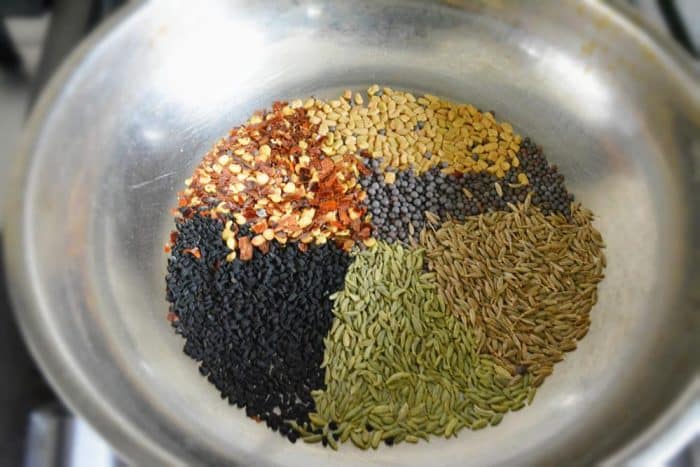
- Over medium-low heat, toast the spices, stirring and tossing frequently, until fragrant and slightly brown.

- Remove from heat and allow it to cool. Transfer the cooled spices to a blender or motor-pestle. For a bold and impactful flavor, coarsely grind the spices.
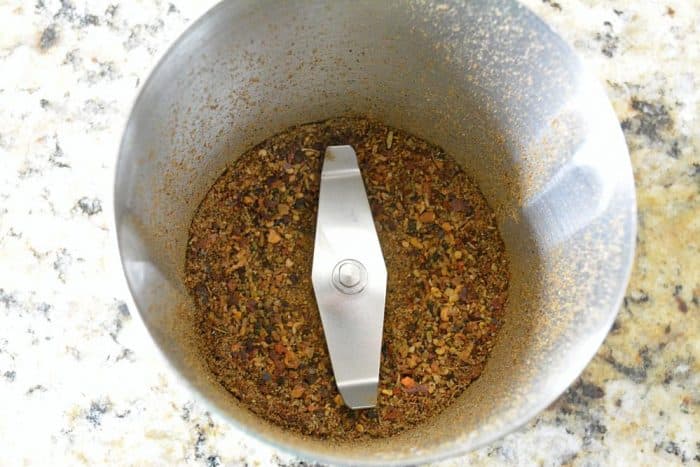
- Using a mortar and pestle freshly ground black cardamom. Set aside.

PREPARE THE PICKLING SYRUP
- Combine vinegar and jaggery in a small heavy pan. Whisk to combine. Bring the jaggery syrup to a boil. Stir in freshly ground black cardamom and the pickling spice to this mixture.

- Mix it well until combined. Boil the syrup until it forms a thick 1-string consistency.Set aside to cool.

ASSEMBLE GAJAR GOBHI SHALGAM KA ACHAR
- Heat mustard oil in a heavy pan. Cook until it starts to fume. Remove from heat once it starts to fume and set it aside to cool slightly.

- Once cooled, add ginger-garlic paste to it. Sauté until the ginger-garlic mix becomes slightly brown. The goal is to cook the raw smell of ginger and garlic. It will take about 12-14 minutes on a medium-low flame.Once cooked, take it off the flame and set it aside.
- Transfer the vegetables to a large mixing bowl. Now, add the vinegar+jaggery+spice mix to the vegetables. Next, add the cooked ginger-garlic paste to gobhi, gajar, shalgam, and beetroot.
- Add Kashmiri red chili powder, cinnamon powder, and salt.

- Use a clean spoon and toss everything together until everything is well blended.Do not transfer the gobhi gajar shalgam achar to a jar as yet; allow the pickle to cool completely. Cover the pickle bowl with a kitchen towel and let it cool.
- Once completely cooled, transfer the pickle to a clean, sterilized, dry jar. Cover the jar tightly with a lid. Place the jar in the sun to mature. It will take at least 2-3 days at room temperature for the gobhi gajar shalgam achar to mature.
- Achar will be ready in 4-5 days. Serve it alongside your favorite meal and enjoy!
Hi , under the spice section cumin is mentioned , would you please confirm the quantity of cumin needed ?
Thank you
Carolyn, please add one tablespoon of Cumin seeds.
I tried making this pickle and it came out perfectly! Thank you for your recipe
I am saving this recipe! Have been looking for this Chaat with gudh since a long time. Thank you for sharing!
Pleasure is all mine, Sonal. So glad you liked the recipe. 😊
My MIL used to make this pickle when she visited! My husband n I loved it. Now we have kept the tradition... My son seems to also enjoy it thanks I wondered if my mil used onions but we stuck to you recipe
Thank you, Christabelle!
So glad you liked the recipe. 😊
Question: I am aware that mostly mustard oil is used in punjabi achar however because it has a strong smell/flavour, would it smell bad if we make it at home? Or it has a similar smell/taste to store bought achars in mustard oil? By the way, your recipe looks wonderful.
Thank you so much, Esha! This pickle has the traditional taste and aroma just like mom's-used-to-make because, unlike market pickles, it contains no extra preservatives or unpronounced ingredients. This pickle doesn't smell bad if made at home; just follow the steps carefully, such as - cook the mustard oil, blanching/drying vegetables, cook garlic-ginger paste, jaggery syrup, and you should be good. Patience is the key, so take it slow as this pickle is a good 2 days of work minus the mature time. 😊
Hi,can we dehydrate the veggies in air fryer after blanching, Since it is cold and snowy here, I do not want to use fan, or if using oven, can you please suggest temp and for how long. Thanks
Anita, I have the same weather as yours. 🙂 As mentioned in the recipe, dry the veggies in the oven @ 200 degrees F for 10 minutes. Remove from the oven and leave it on the counter overnight. The following day, proceed with the recipe.
Can I use white wine vinegar instead?
Harmeet, white distilled vinegar, is a fermented alcohol with 5-8% acidity. You can substitute white wine vinegar in this achar as long as the one you use contains 5% or more acidity. Please check the labels before use.
Thanks for this delicious recipe. But seem to not find 'kalonji' and fenugreek seeds in list of ingredients? Pls help.
Thanks for pointing that out!
The recipe has been updated.
Look promising recipe, I would love to get it a shot. How long this pickle can be stored? And can it be stored at room temperature or should be kept in fridge?
Thanks!
Thanks, Isha!
This pickle can be stored at room temperature for 6 months. Just take basic precautions like -
1. Store pickle in a sterilized dry jar,
2. No water touches the pickle,
3. Every time use a fresh spoon for the pickle.
Thankyou so much for yummy recipes.
You are welcome!
Thank for the recipe.
Pleasure is all mine. 🙂
Recipe 10/10
Thank you. 🙂
Hello! I have dried all my vegetables and I am about to proceed with the next steps. Can you please confirm the amount of cloves needed. 6-7 tablespoons of cloves seems like a lot. Should it be teaspoons? It seems like you use a lot less in the pictures, so I just wanted to make sure. I am very excited to try this achar. Thank you for the wonderful recipe Ruchi!
Thanks for pointing that our Step!
Have updated the recipe with correct memasurements.
Hi can I make it without jaggery. And low oil.
Puja, I don't think either of these is possible for this recipe.
In pickles, oil acts as a preservative. Lowering the quantity may result in spoiling of the achar.
Jaggery is added to balance the sourness or tarty flavor from vinegar. Removing that would make the pickle too sour. Hope that helps!
Quick question - why do we need to blanch the veggies? Can we microwave them instead? I did the same but my veggies looked shriveled at the end of the day 🙁
Purpose of blanching is to sterilize the vegetables. In pickles - vegetables are blanched to stop the action of natural enzymes present in them. This process prevents the pickle from spoiling and also extends its storage life. Microwave will fail to do so. Hope that answers your query.
Yes, thank you. I am hoping that 8 hours of drying is sufficient? I live in upstate NY so it is very cold this time of the year and I do not have enough sun to lay them out, as we did in India!
Nishtha, 8 hours of drying time is pretty good.
If the veggies still have some moisture left, dry them under a fan and you should be good.
I use every ingredients accordingly, my pickle color gets black,where is mistake.
Anju, there are a few reasons why a pickle turns black -
1. Adding powdered spices can cause the pickles to turn dark.
2. If stored in a container with a metal lid, the pickle can turn dark because of the lid's corrosion.
3. Any amount of water on the storage container or the ingredients can result in white fungus formation, later resulting in darker sour-smelling pickles.
I hope that helps!!
Hi my name is raj can I use brown sugar because I don't have jaggery and vegetable oil not mustard oil
Thanks for stopping by Raj! Yes, you can use brown sugar for this recipe. To get an authentic Punjabi flavor in your pickle, I would suggest - use mustard oil. Mustard oil has a strong flavor and is traditionally used for pickles. Other substitute for mustard oil is - sunflower oil or canola oil.
My achar is ready. So tasty an balanced ingredients. Thanks for your steps...its a great great help... my mil is super impressed. Only thing she mentioned is to put rai in it. Is it advisable? But even without that it is tangy and super super yum!!
Thanks for trying the recipe Sumedha and sharing your feedback with me. Glad you liked the recipe. Sure you can add rai to the achar.
Thanks a lot for making this achar waiting for a long time.Great stuff will try soon looks yummy.
Sure Aseem. If possible do share your feedback. Thanks!!
Would love to get simple good recepies