
Karwa Chouth Vrat katha and Vrat vidhi
Karwa Chauth is a beautiful Hindu festival celebrating love, devotion, and marital bonds. From pre-dawn Sargi to Vrat Katha, Puja Vidhi, and moonrise rituals, this complete guide walks you through each tradition step by step, helping you observe Karwa Chauth with confidence, meaning, and devotion—whether it's your first time or a cherished family tradition.
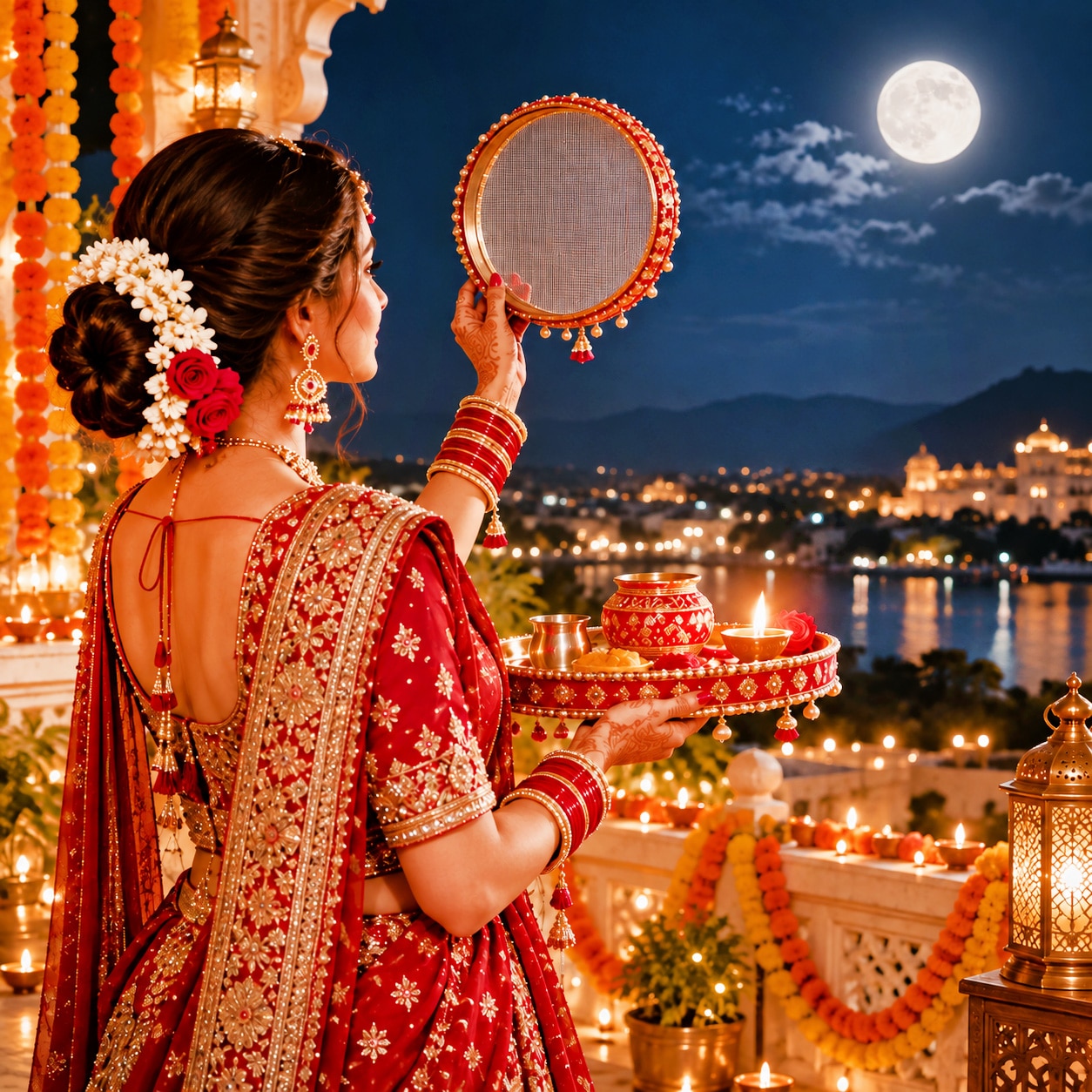
What Is Karwa Chauth?
Karwa Chauth, also known as Karva Chauth or Karwa Chouth, is a cherished Hindu festival celebrated with prayers for a husband's long life, good health, and prosperity. Rooted in tradition and devotion, this beautiful occasion honors the sacred bond of marriage, reflecting the deep love, trust, mutual respect, and togetherness shared between husband and wife.
The name comes from two words:
Karwa (Karva): Refers to a small earthen pot traditionally used to hold water during religious ceremonies. The traditional earthen pot, known as the Karwa, symbolizes peace, prosperity, and well-being.
Chauth (Chaturthi): Means the fourth day of the lunar fortnight.
Together, the name refers to a festival that is observed on the fourth day of the waning moon (Krishna Paksha) in the Hindu month of Kartik.
Traditionally, married women observe a fast known as the Karwa Chauth Vrat, often without food or water from sunrise until the moon is sighted in the evening. This is commonly called a nirjala vrat.
The fast is traditionally associated with a wife's prayers for her husband's long life, good health, and prosperity. Today, some couples also choose to observe the occasion together as a celebration of mutual love and commitment.
However, fasting practices are personal, and traditions can differ considerably among families and communities.
From preparing the traditional Karwa Chauth Sargi before sunrise to arranging the puja thali, listening to the sacred Karwa Chauth Vrat Katha, and performing the evening Chand Puja, every ritual carries a special significance.
But Karwa Chauth is much more than a day of fasting. It is a celebration of family traditions, blessings passed down through generations, and the love and companionship that make a marriage meaningful.
If you are celebrating Karwa Chauth for the first time or looking for a detailed refresher on the rituals, this comprehensive guide will walk you through everything you need to know.
Here, you'll discover the significance of Karwa Chauth, the story behind the festival, Karwa Chauth puja samagri, traditional Sargi preparations, step-by-step Karwa Chauth puja vidhi, Vrat Katha, moonrise rituals, and how to break the Karwa Chauth fast.
Whether you celebrate with family, friends, or away from home, I hope this guide helps you honor your traditions with confidence and joy.
Which Gods and Goddesses Are Worshipped on Karwa Chauth?
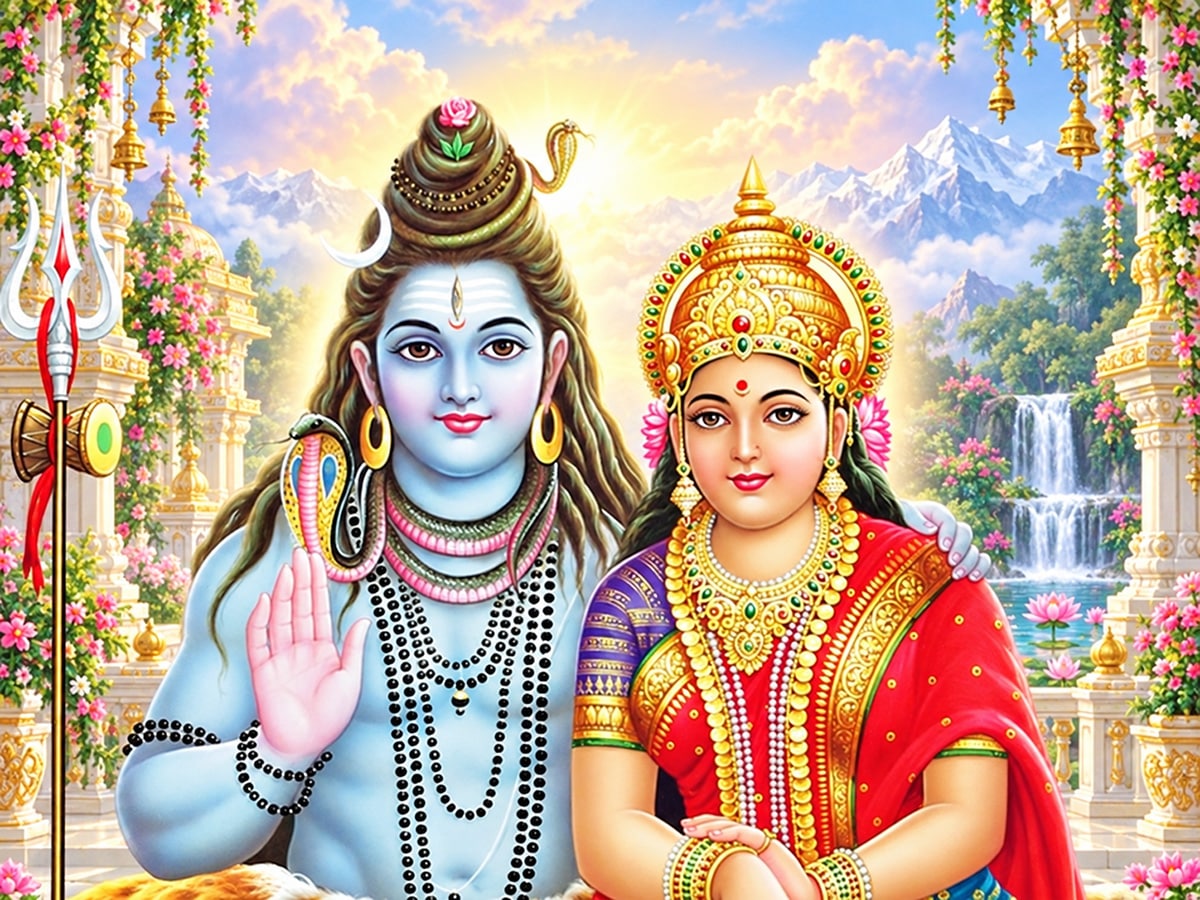
On Karwa Chauth, women offer prayers to Lord Shiva, Goddess Parvati, and Karwa Mata for their husbands’ long life, good health, and prosperity. Traditionally, a small idol of Gaur Mata or Karwa Mata, approximately two inches tall, is crafted from cow dung and worshipped with devotion.
During the puja, married women offer fruits, sweets, and prasad to Karwa Mata. The eldest married woman of the family traditionally narrates the Karwa Chauth Vrat Katha, while the others listen with reverence. After the puja, prasad and gifts are distributed among daughters and sisters as a gesture of love and blessings. Once the moon rises, women view it through a channi (sieve), offer water (arghya) to the moon, and pray for their husbands’ well-being and longevity. They then break their day-long fast, traditionally by accepting water and the first morsel of food from their husbands.
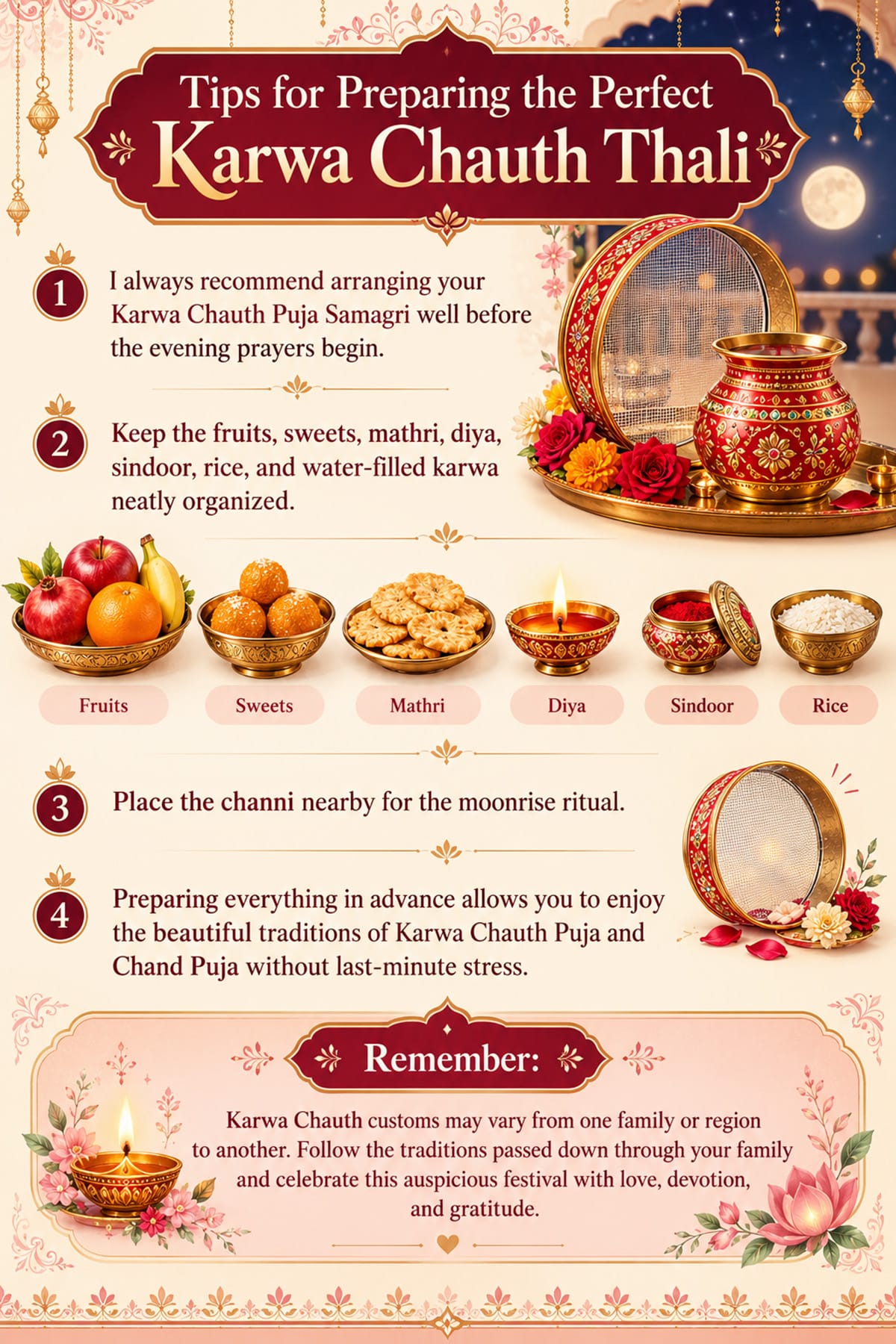
What Should I keep in my Karwa Chauth Puja thali?
Preparing a Karwa Chauth Puja Thali is an important part of the festival celebrations. Each item placed on the thali holds special significance and is used during the evening Karwa Chauth Puja Vidhi or the Chand Puja (moon worship).
Here is a complete list of Karwa Chauth Puja Samagri you will need to prepare your traditional puja thali.
- Thali or Plate: Start with a beautiful a thali or plate to neatly arrange all the essential puja items mentioned below. You can decorate it with colorful embellishments to give it a festive touch.
- Fruits: Fresh fruits are offered to the deities during the evening Karwa Chauth puja. I always include a banana and an apple in my thali. After the prayers, these fruits are traditionally given to a Kanjak (young girls, usually under the age of 10) or offered to a temple priest, according to our family custom.
- Mithai or Sweets: Mithai is an essential part of my Karwa Chauth thali and is traditionally used to break the fast. After offering prayers to the moon during Chand Puja, a small piece of mithai is consumed to mark the completion of the fast.
- Mathri: This crispy, savory Indian snack is another important addition to my puja thali. After fasting all day, eating something sweet may not always feel appealing. That's why I like to include mathri as a delicious savory alternative when breaking the fast.
- Baya and Badam (Almonds): Just like Sargi, Baya is a beautiful Karwa Chauth tradition symbolizing love, appreciation, and respect. It is a gift or token of affection traditionally presented by a daughter-in-law to her mother-in-law. In our family, instead of money or elaborate gifts, my mother-in-law always preferred badam (almonds). This simple yet thoughtful tradition has always been special to me.
- Diya (Oil Lamp): Lighting a diya is an integral part of Karwa Chauth prayers. I always prepare two diyas—one for the evening thali pujan and another for the moon worship. The warm glow of the diyas adds a beautiful, spiritual touch to the celebration. You can also follow my step-by-step tutorial on how to make a Karwa Chauth diya at home.
- Sindoor (Vermilion): Sindoor is an important symbol of marriage in many Hindu traditions and is included in the puja thali. In our family, after the moon worship is complete, the husband lovingly applies sindoor to his wife's forehead as a symbol of their marital bond.
- Colorful Cloth or Chunni: A decorative chunni or vibrant piece of cloth is used to cover the Karwa Chauth thali. Choose a festive color such as red, pink, orange, or gold to complement the traditional celebration.
- Gadvi, Karwa, or Steel Glass: A karwa is a small vessel traditionally filled with water and used during both the evening puja and Chand Puja. Depending on your family customs, you can use an earthen pot, copper vessel, or steel glass. The water is also used while offering Arghya (water offering) to the moon.
- Channi or Sieve: A sieve or channi is one of the most recognizable items associated with Karwa Chauth. It is used during the Chand Puja, when married women traditionally view the moon and then their husbands through the sieve. In our family, the channi is used only during the moonrise ritual and is not required for the earlier evening puja.
- Rice (Akshat): Although not shown in my puja thali, uncooked rice is another important item to keep ready. A small pinch of rice is commonly used in Hindu prayers and is included in our family's Chandra Arghya, the ritual offering made to the moon.
- Matchbox or Lighter: Finally, don't forget to keep a matchbox or lighter handy to light your diyas. It may seem like a small detail, but having everything ready beforehand makes the evening rituals much easier.
Karwa Chouth Vrat katha in Hindi and Vrat vidhi: How to Karwa Chauth Puja?


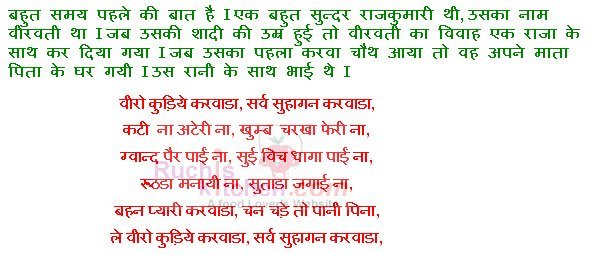
Karwa Chouth Vrat katha in Hindi and Vrat vidhi: ANOTHER KATHA - RANI VEERAVATI KATHA

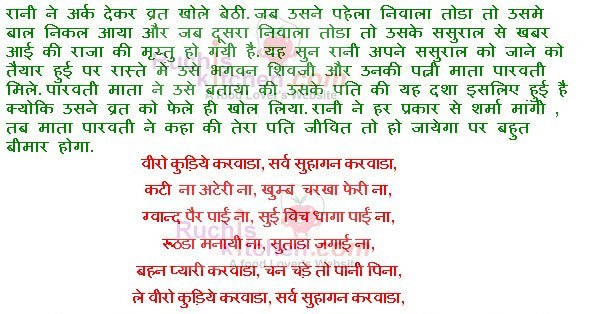

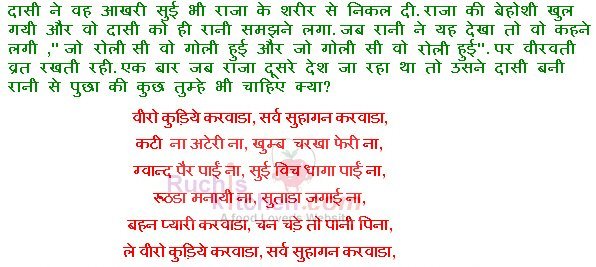

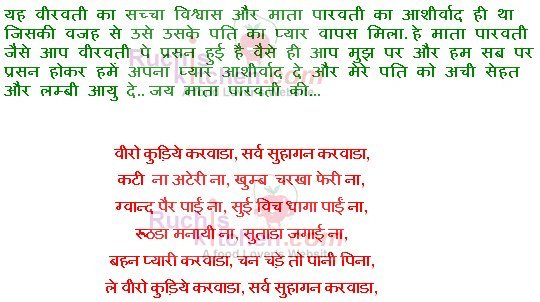
Karwa Chouth Vrat katha and Vrat vidhi: How to Open Karwa Chauth Vrat?

Tips - How to Break Karwa Chauth Fast – Chand Puja Vidhi
One of the most beautiful and eagerly anticipated moments of Karwa Chauth is the evening moonrise. After completing the puja and listening to the Vrat Katha, women wait for the moon to appear. The Karwa Chauth Chand Puja marks the conclusion of the traditional fasting rituals.
Step 1: Prepare Your Moon Puja Thali
Arrange the required items:
- A thali or plate
- A lit diya - Link to make diya at home.
- A karwa filled with water
- A sieve or channi
- Mithai or mathri
- Rice, if used in your tradition
- Match box to light your diya. Keep the items together so that everything is ready when the moon becomes visible.
Step 2: Wait for the Moon to Rise
Check the moonrise time for your location. Remember, the time is different from city to city, and clouds or surrounding buildings may make the moon difficult to see immediately.
Step 3: View the Moon Through the Channi & Offer Arghya to the Moon
Once the moon rises and is clearly visible in the night sky, begin the Karwa Chauth moonrise rituals by offering prayers to the moon with folded hands. Next, look at the moon through a channi (sieve). (In many North Indian households, married women look at the moon through a sieve, sometimes with a diya positioned near it according to family custom. The sieve is a recognizable symbol of the Karwa Chauth celebration.)
Now, offer water from the karwa as a mark of respect and devotion. This ritual is known as Chandra Arghya or offering water to the moon. Families may accompany it with prayers, rice offerings, or other customary rituals. Take a little water in your hand and gently sprinkle it toward the moon as an offering (arghya).
Step 4: Look at Your Husband Through the Sieve
After worshipping the moon, many women look at their husbands through the same channi. This meaningful ritual is often considered a symbolic expression of marital love and togetherness. Now, carefully hold your lit diya facing the moon, recite the Gayatri Mantra, and offer heartfelt prayers for your husband's long life, good health, happiness, and prosperity. Say this -
In Hindi - सिर धड़ी, पैर कड़ी, अर्घ देने सर्व सुहागन चौबारे चढ़ी।
In English - Shir dhadi, pair kadi, argh dene sarv suhagan chobare chadhi.
In some family traditions, the diya is then placed/thrown behind you. For safety, make sure it is away from people, clothing, decorations, and flammable materials.
Step 6: Break the Fast
Traditionally, the husband offers his wife water and a small bite of food or sweet to mark the completion of the fast. With the completion of these sacred rituals, your Karwa Chauth fast is complete. Exchange blessings and good wishes with your loved ones, drink plenty of water, and enjoy a meal to lovingly break your fast. The exact steps and sequence may differ depending on household traditions.
Wishing everyone a very Happy and Blessed Karwa Chauth!
May this beautiful festival bring love, happiness, good health, prosperity, and harmony into every home. May your relationships grow stronger, your hearts be filled with joy, and your lives be blessed with peace, togetherness, and endless happiness.
Stay blessed, cherish your loved ones, and celebrate Karwa Chauth with devotion, love, and festive cheer!
Thanks a lot
My pleasure. 😊