
How to make Karwa chouth diya or lamp
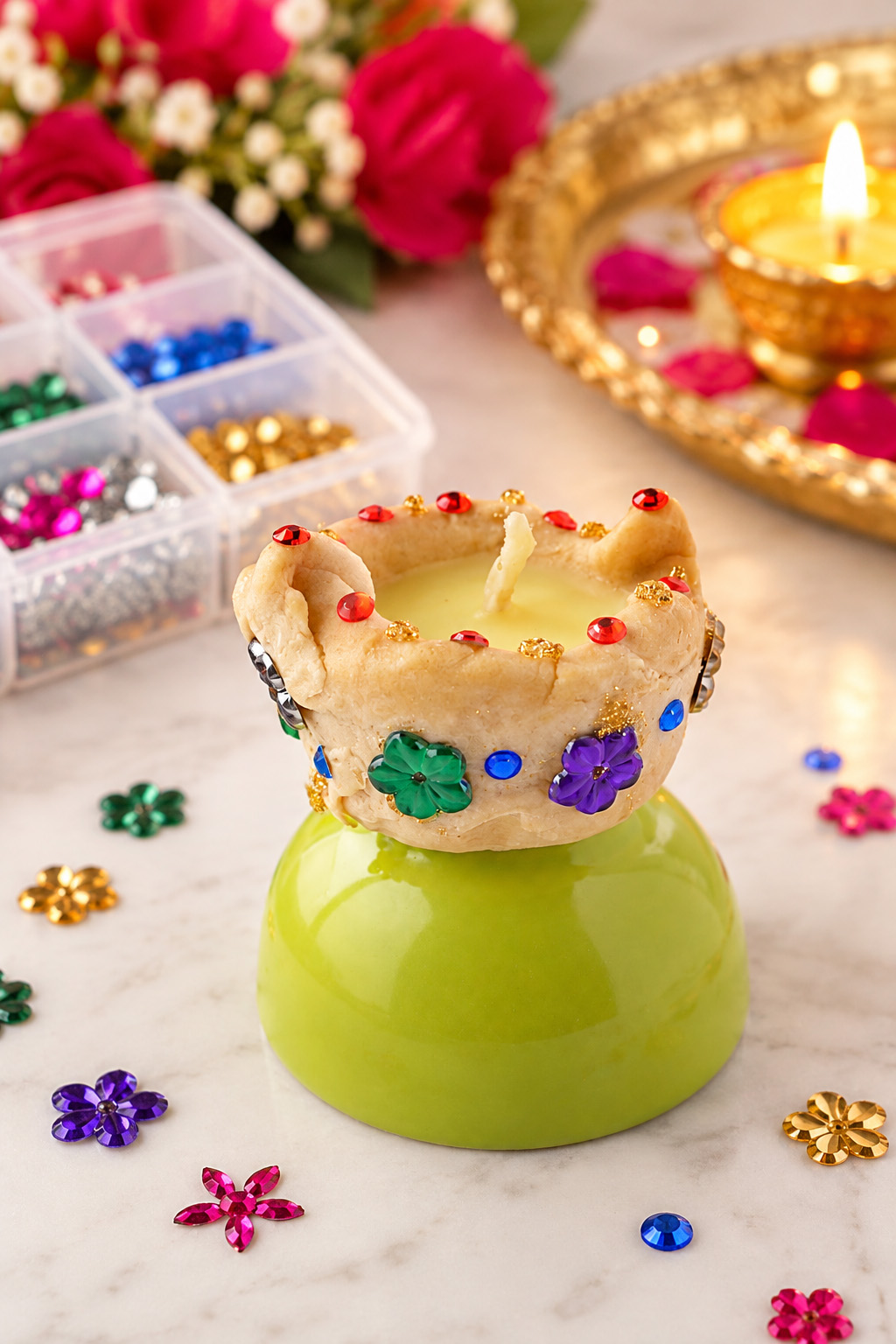
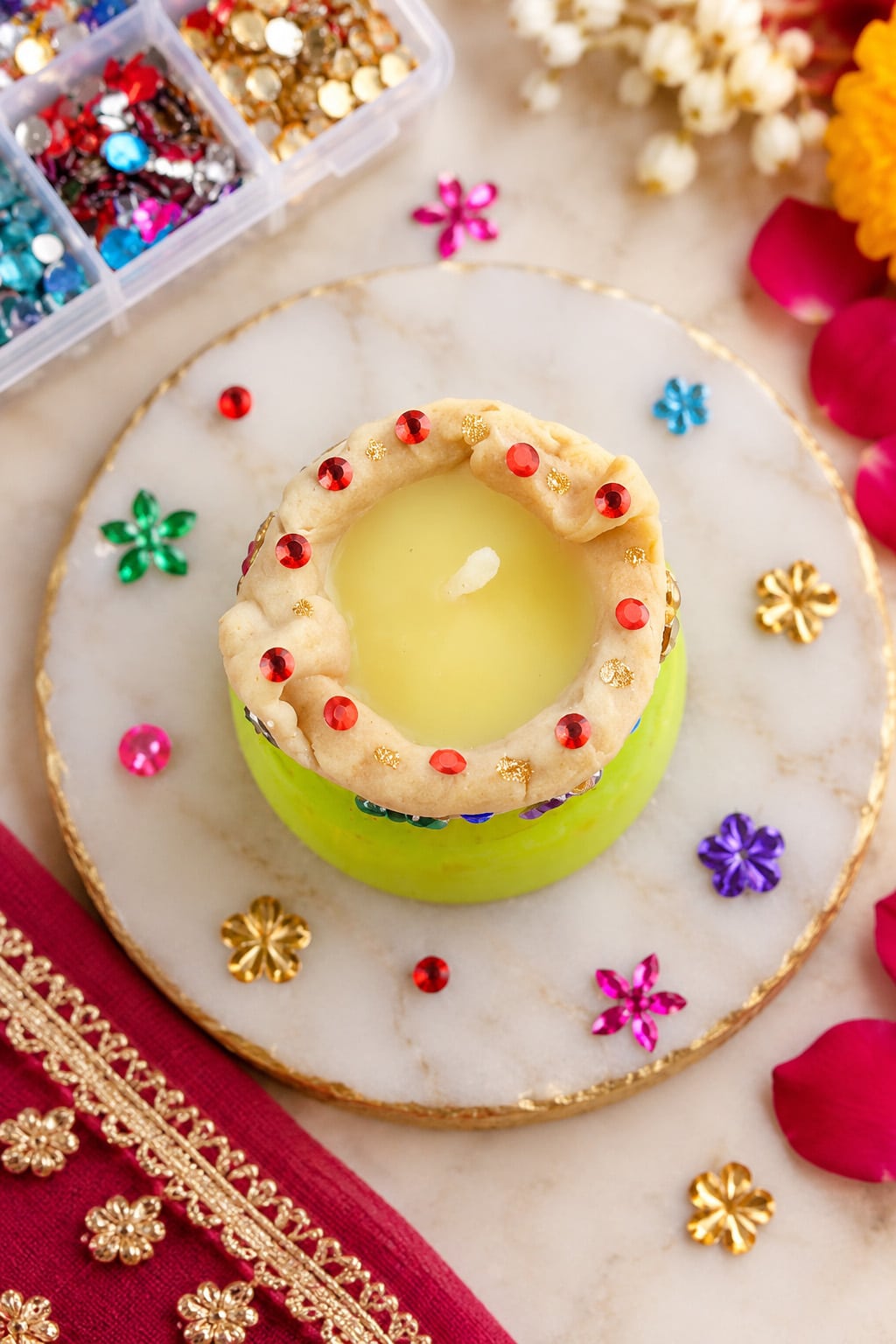
Learn how to make a traditional Karwa Chauth diya at home using simple ingredients like wheat flour, ghee, rice, and a cotton wick. This easy, step-by-step atta diya tutorial is perfect for adding a beautiful, handmade touch to your Karwa Chauth Puja Thali and Chand Puja celebrations.
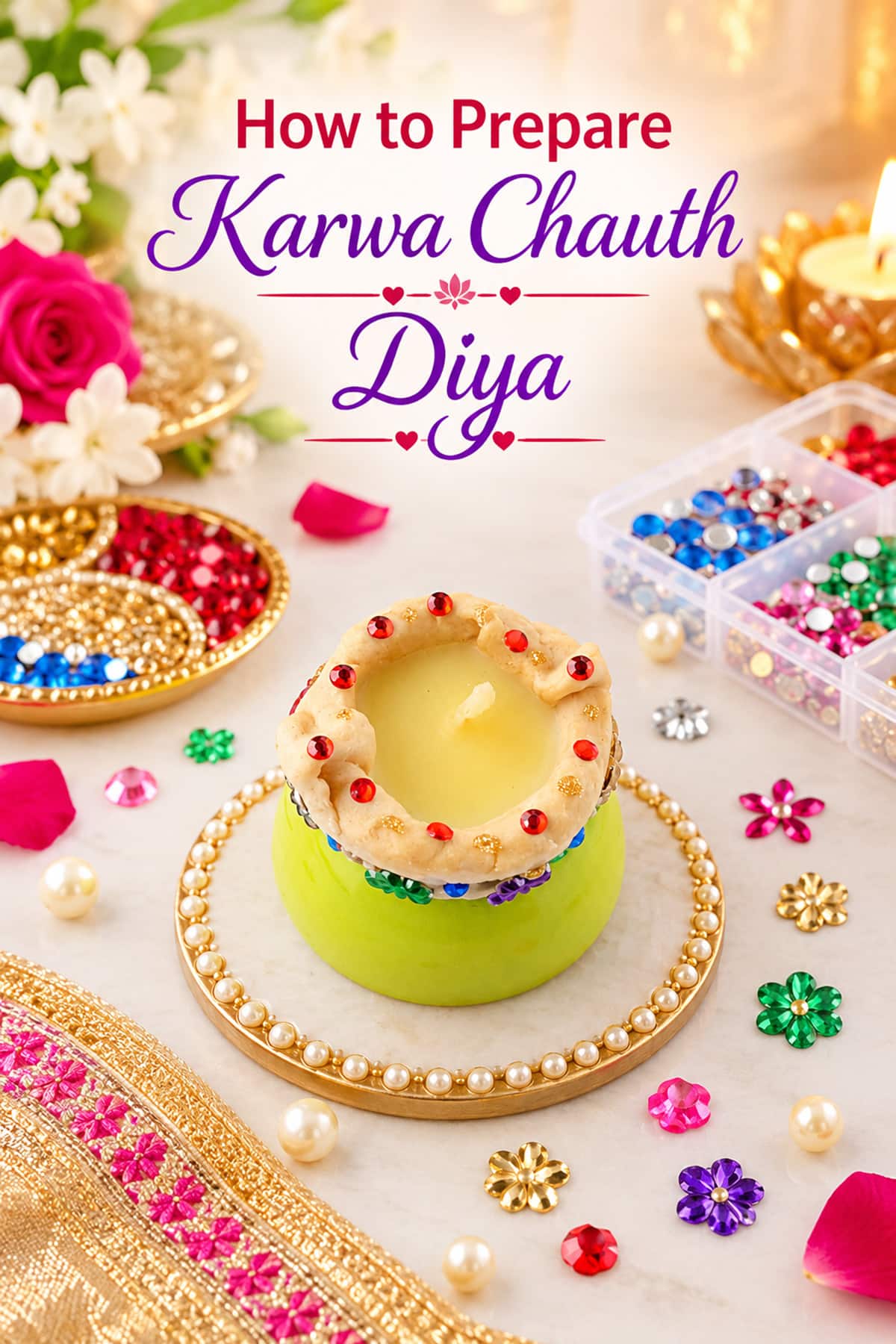
What Is an Atta Diya?
An atta diya, also known as aate ka diya or atte ka deepak, is a traditional Indian lamp made from whole wheat flour dough. Shaped by hand, filled with ghee, and fitted with a cotton wick, it is used in Hindu festivals and religious ceremonies, including Karwa Chauth, Diwali, Navratri, and Teej.
In my family, preparing homemade atta diyas is a cherished Karwa Chauth tradition. I make two diyas—one for the evening thali pujan and another for Chand Puja (moon worship).
Making your own wheat flour diya is a simple yet meaningful way to honor family traditions and add a personal touch to your celebrations. With just a few everyday kitchen ingredients and a little creativity, you can create a beautiful diya that symbolizes light, devotion, and blessings.
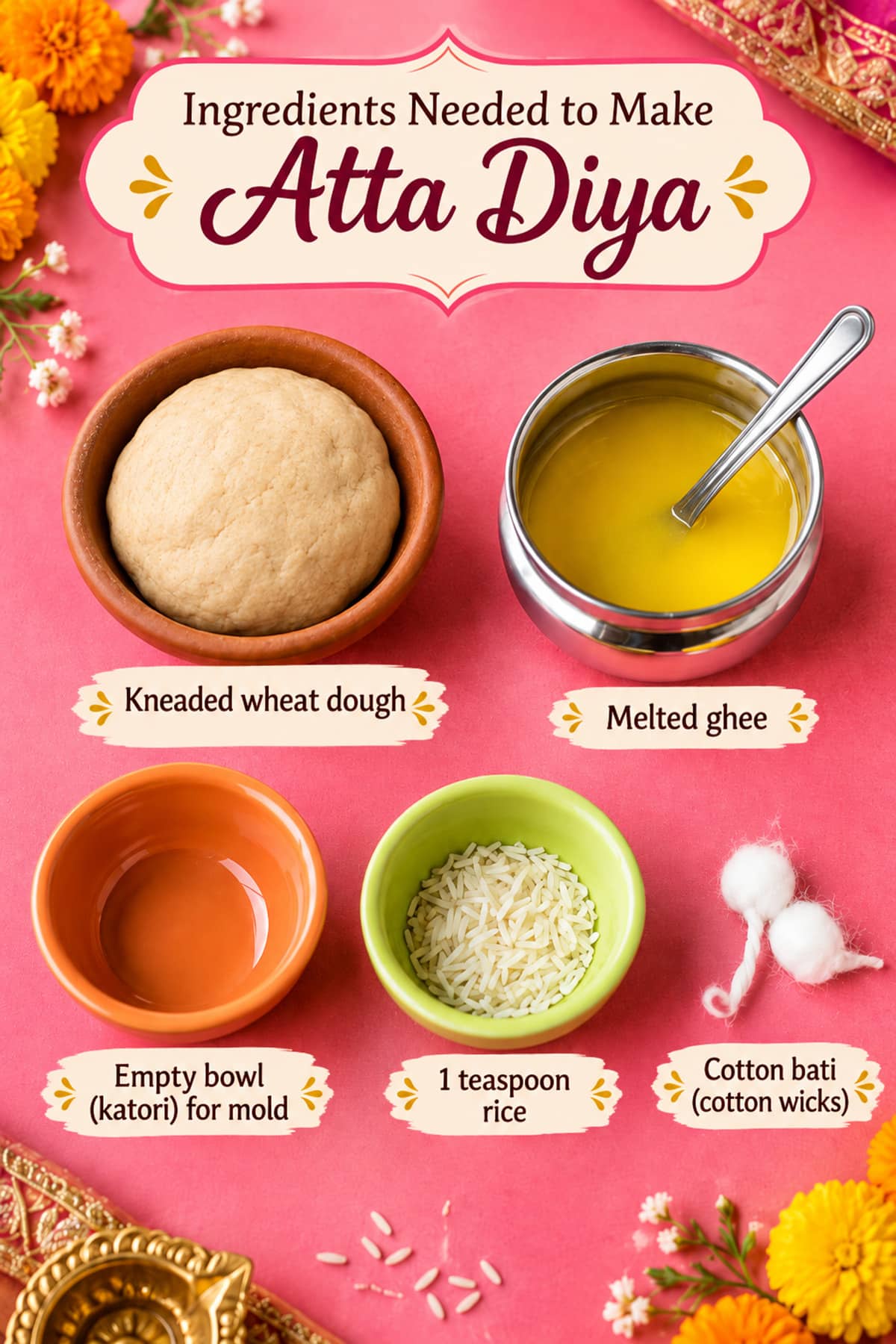
Why Make a Homemade Diya for Karwa Chauth?
There is something particularly special about including handmade items in your festive celebrations. Rather than purchasing a ready-made lamp, you can create a traditional diya with ingredients readily available in your kitchen. Here are a few reasons I love this easy homemade diya-making method.
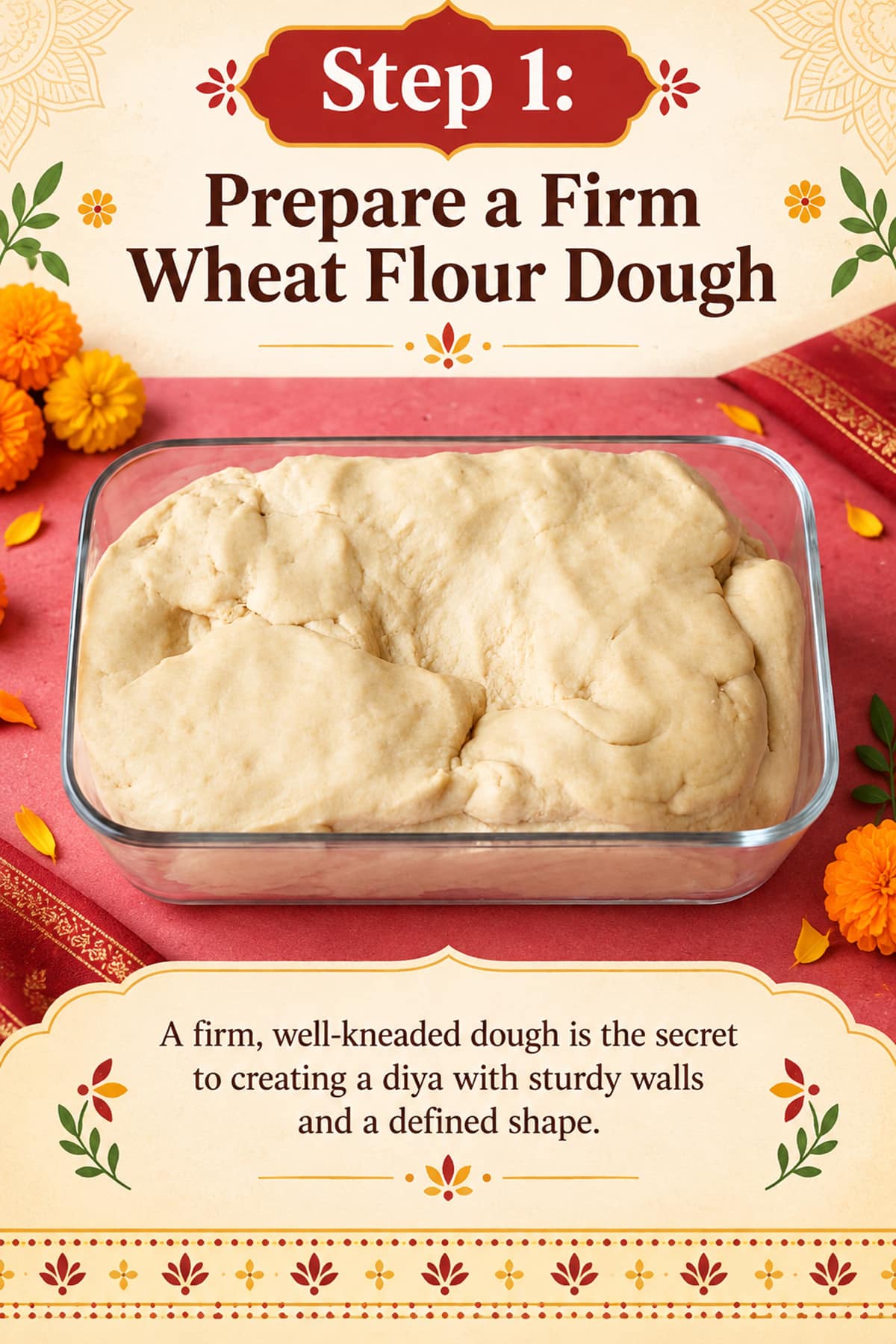
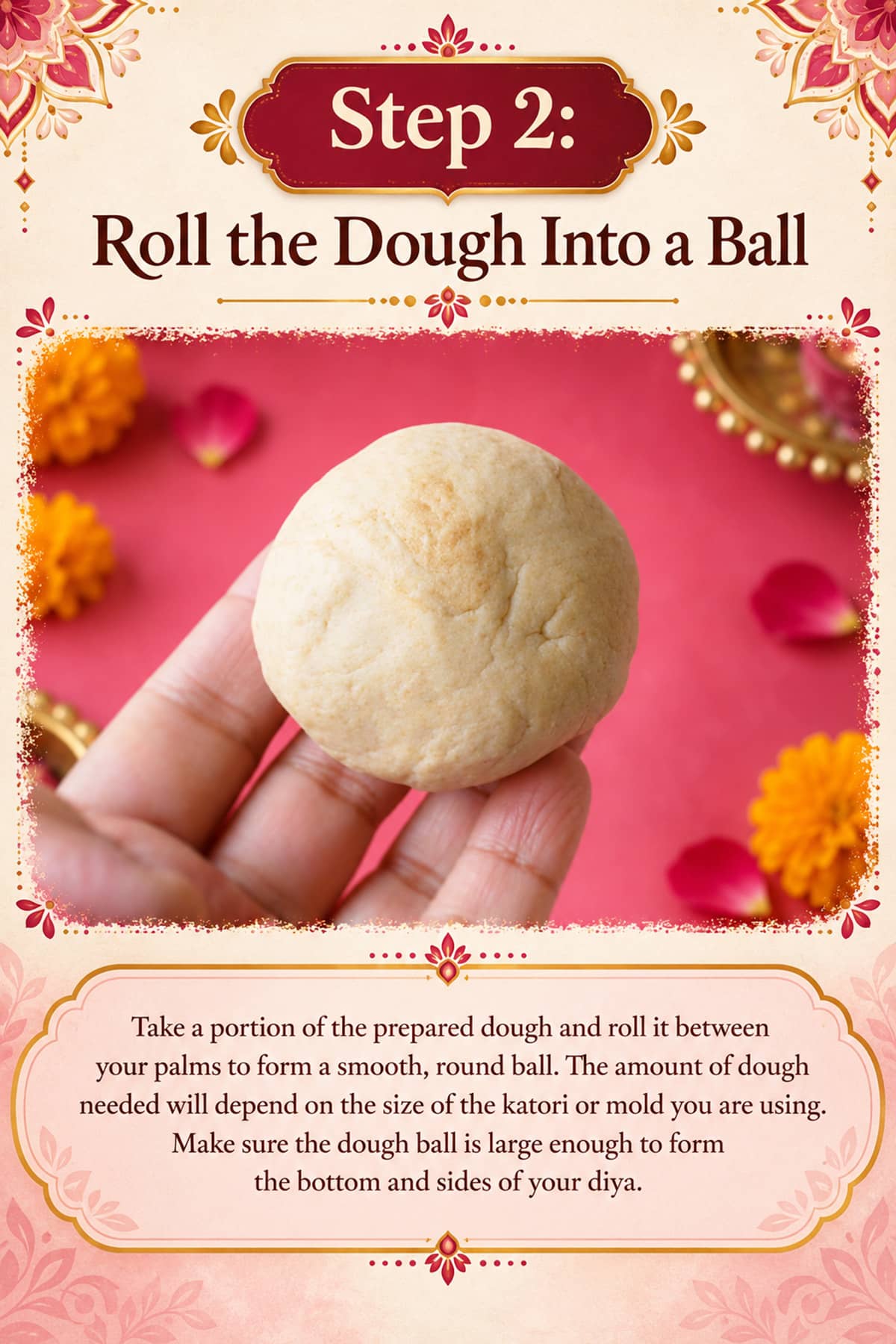
Tips to Make Karwa Chauth Diya at Home – Step-by-Step Instructions

FAQ's - Karwa Chauth Diya
Why Is My Atta Diya Losing Its Shape?
The most common reason is dough that contains too much water. If the dough feels sticky or overly soft, knead in a little more wheat flour. Also, avoid stretching the dough too thin while shaping.
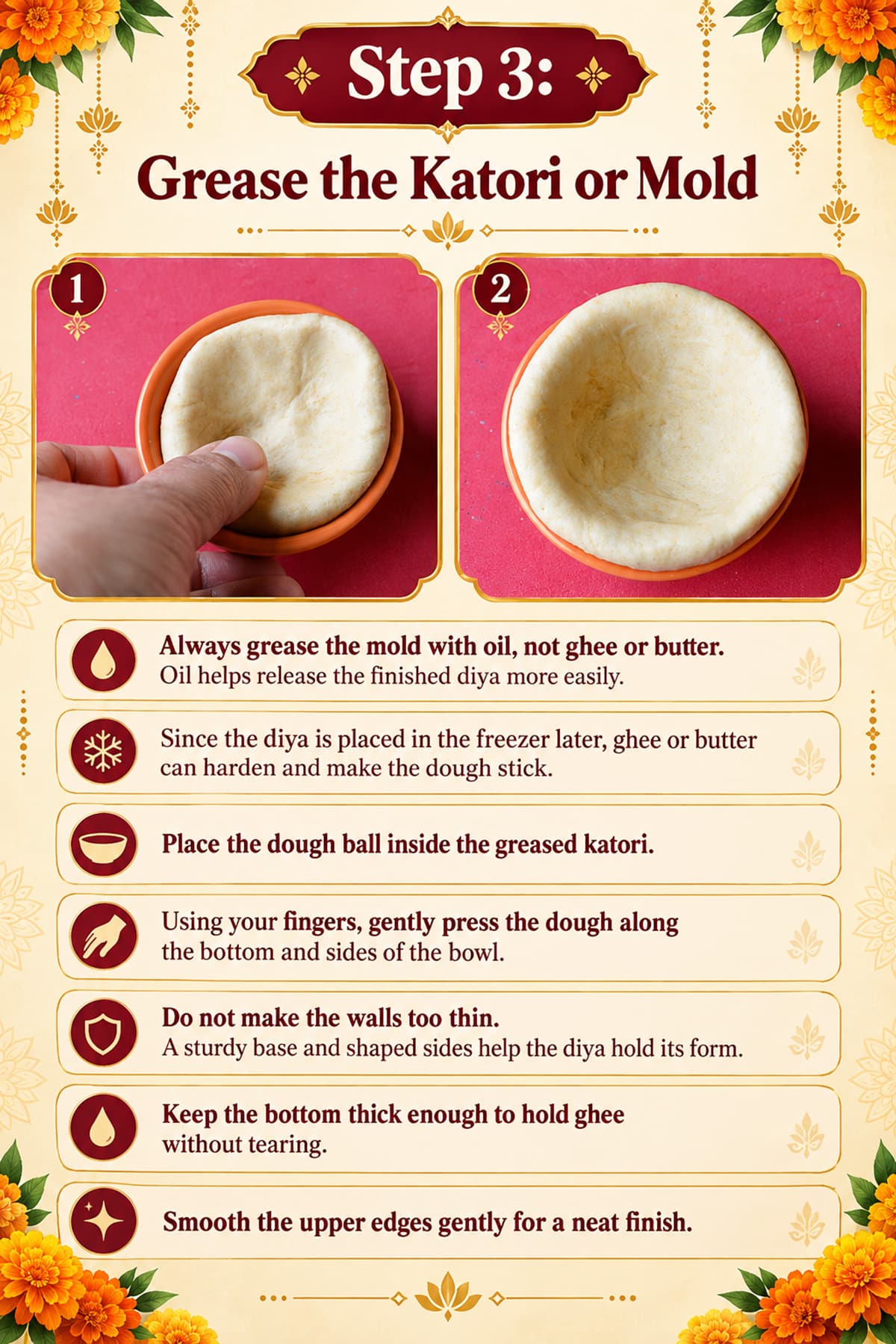
Why Is the Diya Sticking to the Katori?
The mold may not have been greased properly, or the fat used for greasing may have hardened during freezing. Use a thin coating of oil inside the katori. If the diya sticks, gently loosen the edges using a spoon.
Why Is the Karwa Chauth Diya Sticking to the Katori?
The mold may not have been greased properly, or the fat used for greasing may have hardened during freezing. Use a thin coating of oil inside the katori. If the diya sticks, gently loosen the edges using a spoon.
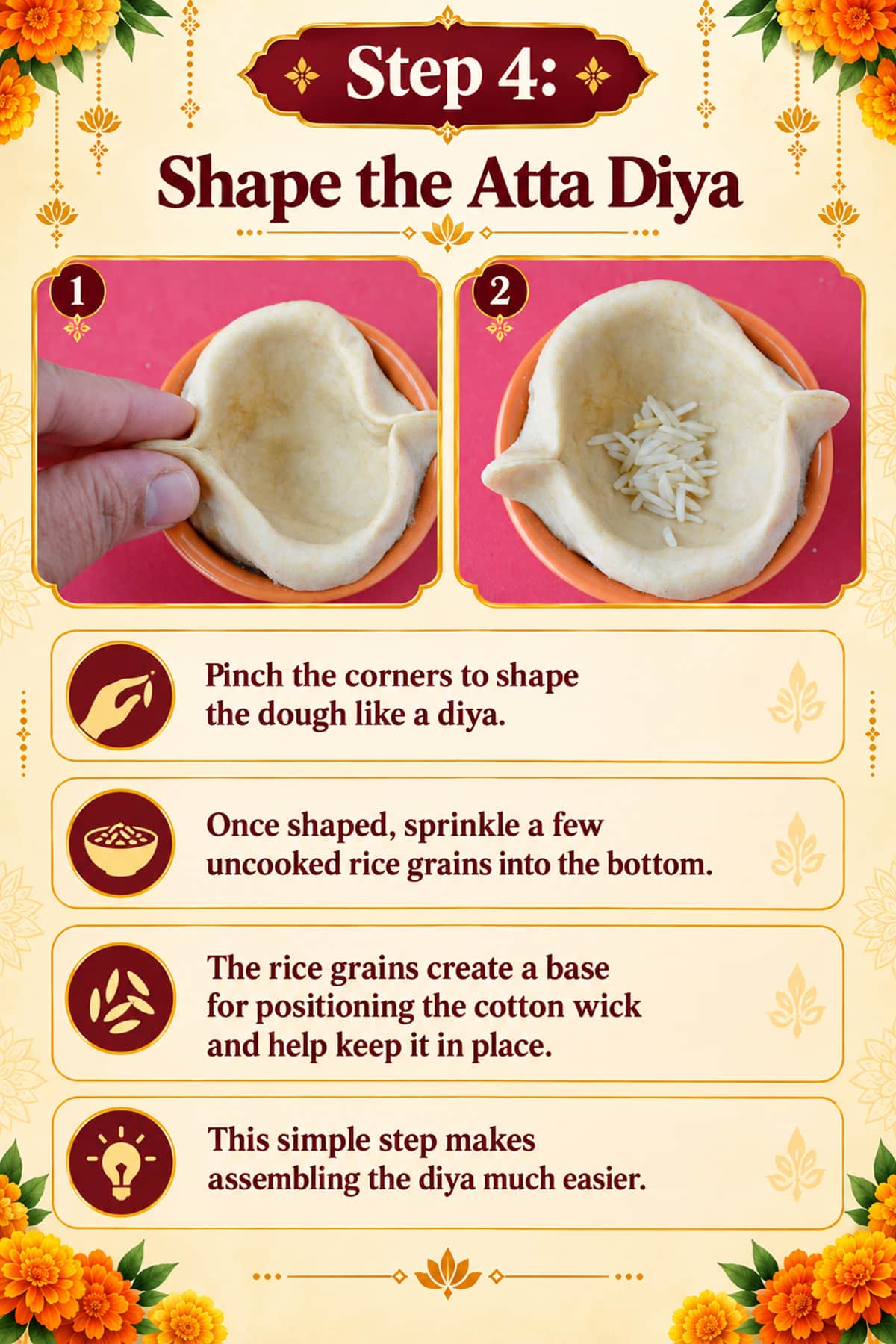
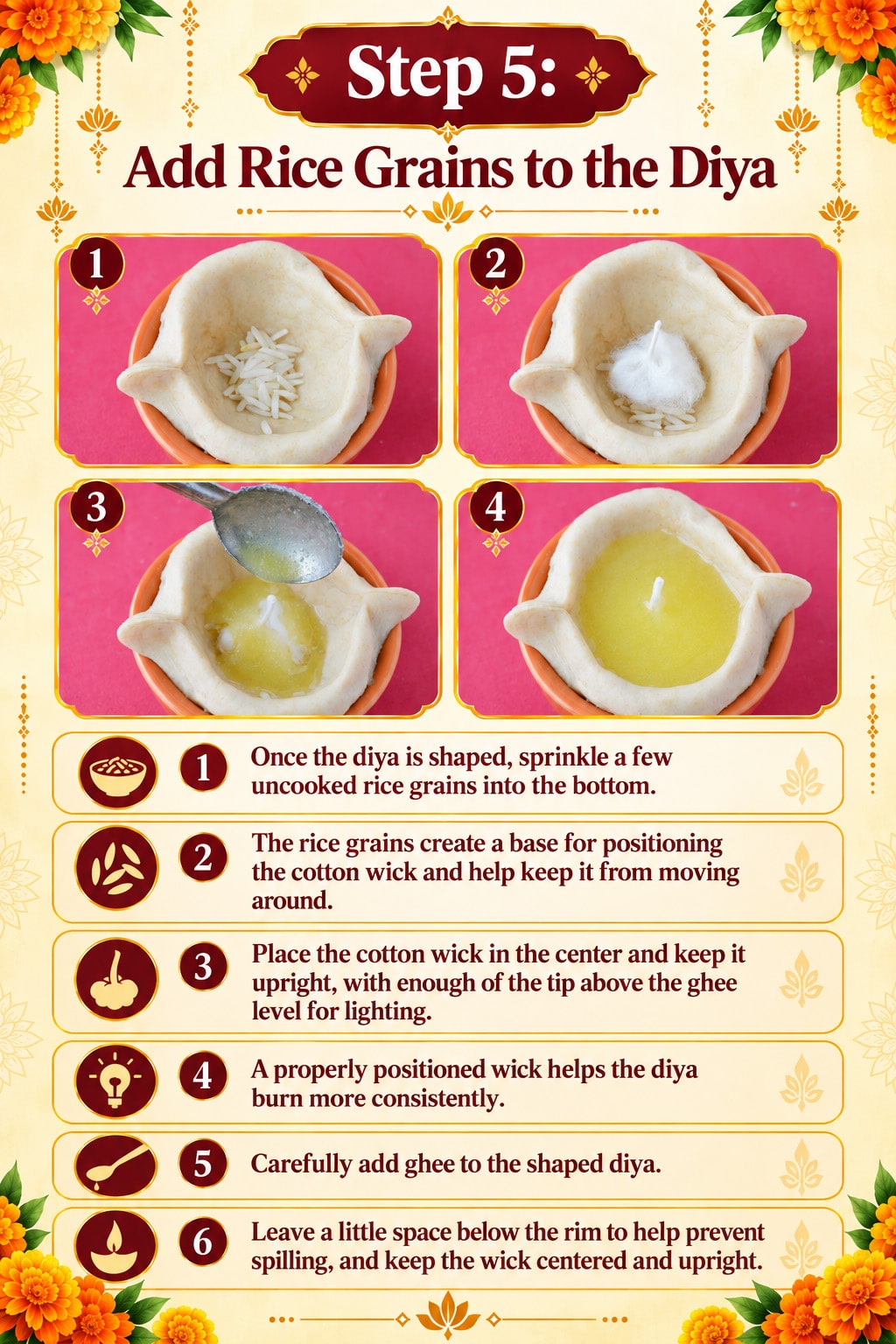
Why Is My Cotton Wick Sinking Into the Ghee?
The wick may not have enough support at its base. Try placing a few rice grains underneath and around it before adding the ghee. Leave sufficient wick exposed above the ghee.
Why Is the Karwa Chauth Diya Cracking While Removing It?
The dough may have been stretched too thin, or excessive force may have been applied while unmolding. Next time, make the base and sides a little thicker and remove the diya slowly.
Can I Fix a Broken Atta Diya?
If the diya cracks or breaks before being filled or used, you can generally reshape fresh dough. If a filled diya develops a crack, do not light it. Transfer the ghee and wick to a suitable heat-resistant lamp or prepare another diya.
Can I use all-purpose flour instead of atta?
All-purpose flour can form a workable dough, but this particular traditional method uses whole wheat atta. If following a specific family custom, use the flour traditionally preferred in your household.
Do I need to bake an atta diya?
No baking is included in this particular tutorial. The dough is shaped in a mold, fitted with a wick, filled with ghee, and frozen until the ghee becomes firm. However, freezing does not make the flour fire-resistant or waterproof. The diya must be handled with care and placed in a suitable heat-resistant container if it will be lit.
Is an atta diya eco-friendly?
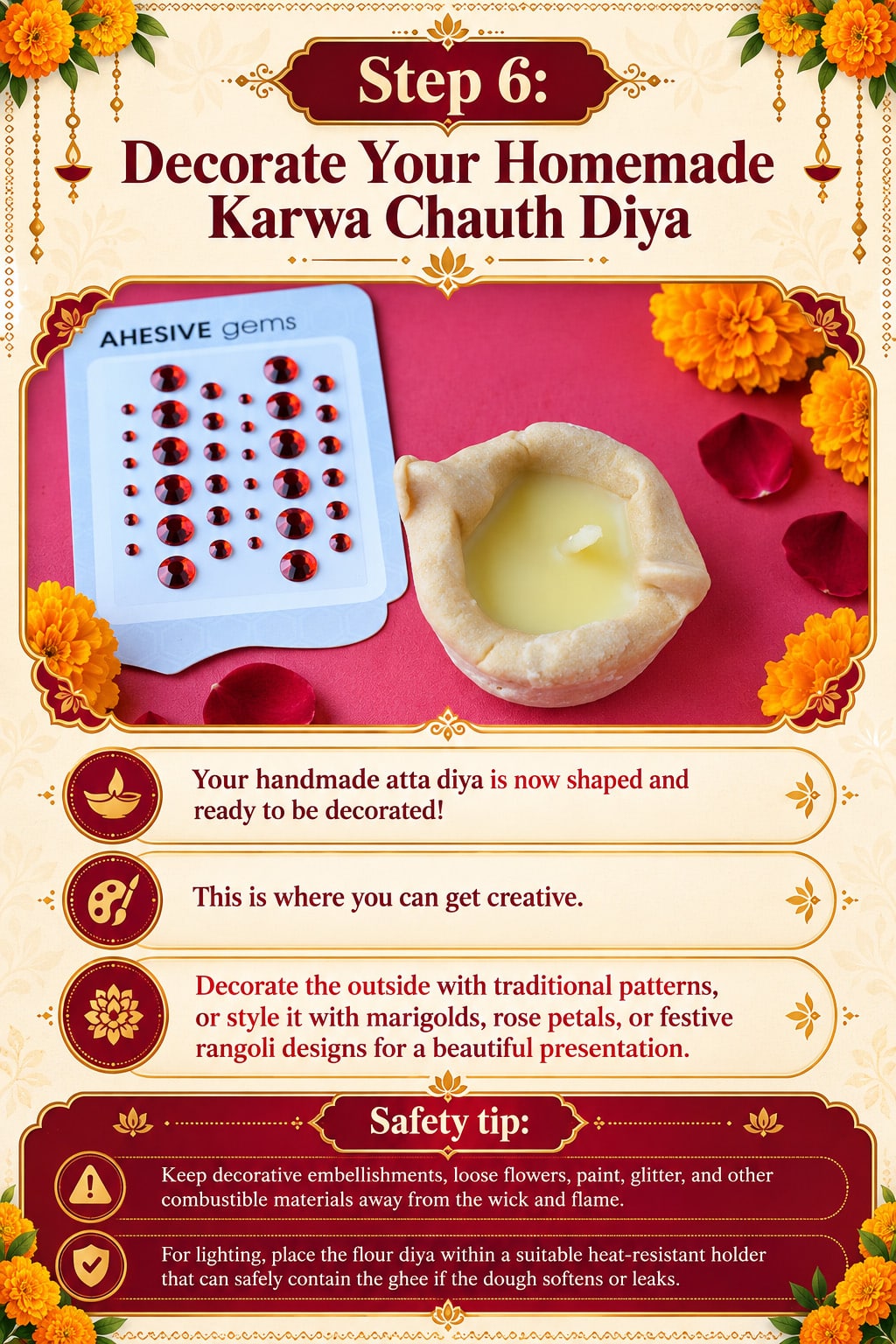
An undecorated wheat flour diya uses a plant-based material rather than plastic or synthetic materials. However, its overall environmental impact depends on the wick, ghee, decorations, and disposal method. Avoid adding non-biodegradable decorations if sustainability is your priority.
Wishing you and your loved ones a very Happy Karwa Chauth!
Stay blessed, and celebrate this beautiful festival with love, faith, and togetherness.
Have you ever made a homemade atta diya for Karwa Chauth? I would love to hear about your experience and the diya-making traditions followed in your family. Share your thoughts in the comments below!
Thank you for such an easy way of making the Dia. Shall surely try this Karva Chauth.
Please do. Thanks for your feedback.