
Gujiya Recipe
Nothing makes Holi complete like this homemade Gujiya recipe packed with the goodness of coconut and a delicious mawa filling. This crispy and flaky deep-fried turnover pastry is a popular North Indian treat made during the festive season.
Servings: 16
Calories: 241kcal
Ingredients
FOR THE GUJIYA DOUGH
- 1½ cup All Purpose Flour
- ¼ cup Ghee
- - - A pinch of Salt
- ¼ cup Lukewarm water + 3 tablespoons extra to knead the dough
GUJIYA FILLING
- 1 tablespoons Ghee
- ¾ cup Mawa
- ¼ cup Unsweetend desiccated Coconut
- ½ cup Powdered Sugar + 2 tablespoons extra adjust to taste
- ½ tablespoons Ghee
- 1 tablespoon Raisins
- 1½ pieces of Slivered Almonds
- 1 tablespoon Cashews
- ¾ tablespoon Charoli Nuts
- ½ teaspoon Cardamom powder
- ½ teaspoon Toasted Saffron strands
- - - Ghee for frying
SUGAR SYRUP - OPTIONAL
- ½ cup Sugar
- 4 tablespoons Water
- ½ teaspoon Green Cardamom powder
- 1 teaspoon Rose water
- ⅛ teaspoon Saffron strands
Instructions
GUJIYA DOUGH
- Sift flour and salt in a mixing bowl, add ghee to the bowl. Using your fingertips, rub the flour and ghee together until the mixture resembles-like breadcrumbs.
- Slowly add lukewarm water to the flour and knead it into a firm dough. The dough should feel soft yet stiff but not sticky.
- Cover the dough with a damp cloth and allow it to rest for 15-20 minutes. This is a required step. Please do not skip through this process. The dough will become more firm as the gluten develops and flour gets hydrated, resulting in crisper gujiyas.
GUJIYA MIXTURE
- Add ghee to a pan, add slivered almonds, charoli nuts, cashews, and raisins. Roast them for 5-6 minutes on a low flame until fragrant.
- Once done, take the pan off the flame and allow them to cool. Transfer the nuts (leave the raisins) to a grinder and grind them into the fine powder. Set aside.
- Add ghee to the same pan; as it melts, add mawa/khoya and roast it for about 2-3 minutes. Once done, take it off the flame and set it aside to cool.
- Now, add coconut, powdered sugar, ground nuts, cardamom powder, and raisins to the mawa.
- Mix until all the ingredients are fully incorporated. The mixture will be fine textured and should feel soft when rubbed in between fingers. Cover and set it aside to cool.
SHAPING GUJIYA
- Divide the gujiya dough into equal-sized balls. Cover the rest of the dough balls with a kitchen cloth and set them aside.
- Take one ball and roll it into a 5-inch disc. Place a tablespoon full of mawa filling in the center of the rolled-out dough. Leave the space around the edges.
- Moisten the edge of the dough with water.
- Lift the dough’s topside and fold it all the way over the rest of the dough to cover the mawa filling, press, and seal the edges well.
- Gujiya mold – This is the easier and fastest method. Place the folded gujiya in a gujiya mold. Press the mold until the edges are pinched together, and the gujiya is sealed. Remove the excess dough from the sides.
- Traditional pleats – It’s done by hand and requires a lot of patience and practice to get the perfect pleats. Take a folded gujiya and twist the sealed edges around the rim of the gujiya to make pleats. This is the most efficient method as the pleats prevent the filling from coming out during frying.
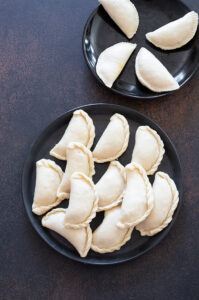
- Repeat the process with the rest of the dough until all the gujiyas are shaped.
- To prevent drying, keep the shaped gujiyas covered with a kitchen cloth at all times.
FRYING GUJIYA
- Heat ghee in a heavy-bottomed pan. Once the ghee is moderately hot, gently slide in the gujiyas and deep-fry them until golden brown and crisp.

- Once cooked, remove from ghee and set them on a kitchen paper towel.
- Fry all the gujiyas in a similar manner. Mawa gujiyas are ready to be served.
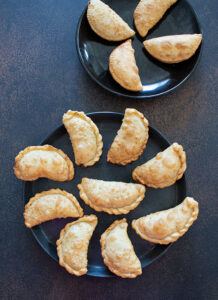
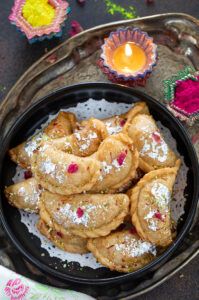
- If you do not prefer to soak them in sugar syrup, then serve them as is garnished with edible dried rose petals and dry nuts.
SUGAR SYRUP
- Combine sugar, water, cardamom powder, and saffron in a pan. Bring it to a boil.
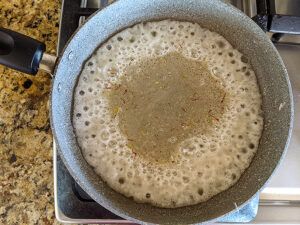
- Our main purpose is to melt the sugar; we are not looking for a sugar consistency here. Therefore, cook the syrup for about 5-6 minutes on a low flame. After the desired cooking time is over, remove it from the heat and allow it to cool.
- Dip the fried gujiyas in the warm sugar syrup for a few seconds. Coat it well. Remove from sugar syrup and set aside.
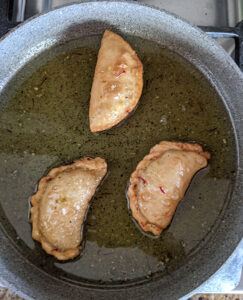
- Coat the rest of the gujiyas in the sugar syrup.
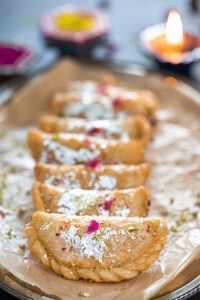
- Sugar glazed Gujiyas are ready to be devoured! Jazz them up crushed pistachios, silver leaf, edible dried rose petals, and serve.
Notes
Tips to make the best Gujiya Recipe
» Ghee — Use the exact amount of moyan/moen to the gujiya dough. To check if your moyan (fat content in dough) is just right, take some dough and press it in between your fist; if it takes the shape of your fist, you are all set. But, if it crumbles and falls apart, then you need a little more to attain that texture.
» Water — Always use lukewarm water for kneading the gujiya dough.
» Cover — Keep your gujiya dough and shaped balls covered at all times to prevent drying.
» Sugar — Add the sugar quantity that is mentioned in the recipe. Too much sugar will harden the filling.
» Roast the nuts — Do not forget to roast the dry nuts in a wee bit of ghee. Roasting nuts release their essential oils and bring out their fullest flavor. It maximizes their taste and is later crushed to the ideal consistency and texture.
» Cool the filling — Make sure the mawa filling is cooled completely before you stuff it inside the gujiya dough.
» Filling — Do not overfill the gujiya with filling; if too much mawa filling is added to the gujiya, it will break apart in frying.
» Seal and secure — To avoid a mess, always make sure your gujiyas are sealed well before adding them to the hot ghee. Apply a little water around the edges of the dough and seal; apply more water if needed.
» Oil temperature — Do not fry the gujiyas on high heat. The oil should be low to medium-hot. Frying them in hot oil will result in uncooked gujiyas. Likewise, if the gujiyas are cooked in moderately hot oil, they will soak up oil.
» Fry Gujiyas in ghee for the BEST flavor.
» Pan —You a wide pan to fry the gujiyas and allow room for the gujiyas to float around during frying. Do not overcrowd the pan; fry the gujiyas in small batches.
Nutrition
Calories: 241kcal | Carbohydrates: 31g | Protein: 5g | Fat: 11g | Saturated Fat: 7g | Trans Fat: 1g | Cholesterol: 17mg | Sodium: 42mg | Potassium: 45mg | Fiber: 36g | Sugar: 13g | Vitamin A: 67IU | Vitamin C: 1mg | Calcium: 108mg | Iron: 1mg