
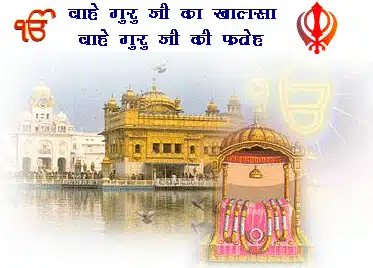
Anniversaries associates with lives of Sikh Gurus are referred to as Gurpurabs. Gurpurab literally means ‘festival of the gurus’ OR a day observed in the remembrance of Guru. On this day one of the ten gurus of the Khalsa Panth is honored. The Sikhs celebrate 10 Gurpurabs in a year. All Gurpurabs are considered auspicious and important but special significance is accorded to the birth anniversary of Guru Nanak, which falls in the month of Kartik (October / November).
WHEN IS GURUPURAB CELEBRATED?
Though there are 10 Gurupurabs observed in a year, the two major ones are Guru Nanak Gurpurab – falling in the month of Kartik (October – November) and Guru Gobind Singh Gurpurab – falling in the month of Pausa (December – January). The martyrdom of Guru Arjun Dev ji is observed in the month of May – June.
HOW IS GURUPURAB CELEBRATED?
The celebration is generally similar for all Gurpurabs; only the hymns and history of a particular occasion is different. All Gurpurabs are considered auspicious and important but special significance is accorded to the birth anniversary of Guru Nanak, as the Sikhs believe that Guru Nanak brought enlightenment to the world, hence the festival is also called Prakash Utsav, the festival of light.
 Fifteen days before the birth anniversary of Guru Nanak, celebrations begin. Religious processions called Prabhat Pheris are taken from house to house by singing shabads (hymns). These pheris generally start three weeks before the festival. Devotees offer sweets and tea when the procession passes by their homes. A day before the festival, an enormous parade starts from the gurdwara in the afternoon.
The celebrations start with the three-day akhand path, in which the Guru Granth Sahib (the holy book of the Sikhs) is read continuously from beginning to end  without a break.Conclusion of the reading coincides with the day of the festival.The Granth Sahib is also carried in procession on a float decorated with flowers throughout the village or city.
Five armed guards, who represent the Panj Pyares, head the procession carrying Nishan Sahibs (the Sikh flag). Local bands play religious music and marching school children form a special part of the procession. As they weave their way through the markets and residential areas of the city, people come forward to seek the blessings of the Panj Pyaras (Five Beloved Ones) , by prostrating themselves before the priests.
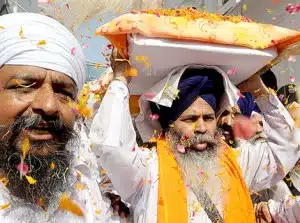 The procession gives an opportunity even to the old and the infirm to pay homage to the Guru Grantha Sahib ji before it winds its way back to the temple. Sikhs visit gurdwaras (Sikh temples) where special programmes are arranged and kirtans (religious songs)are sung.
Free sweets and langar or community lunches are also offered to everyone irrespective of religious faith. Local volunteers serve it with a spirit of seva (service) and bhakti (devotion).
At night Sikhs illuminate and decorate their houses and Gurdwaras with candles and electric lights.On the martyrdom of Guru Arjun Dev kachi lassi (sweetened milk) is offered to the thirsty passers-by to commemorate the death of the Guru who was burnt to death during the hot months of May and June.
WHY IS GURUPURAB CELEBRATED?
The “Guru” in Sikhism is an enlightener and a messenger. They are universal men who free our minds from intolerance and superstitions, beliefs and rituals, and emphasize the simplicity of the religion.
 Guru Nanak ji – The first of the Gurus and the founder of Sikh religion was Guru Nanak. He was born at Talwandi (now known as Nankana Sahib in Pakistan) on October 20, 1469. Guru ji mastered Punjabi, Sanskrit and Persian at an early age and in childhood revolted against ritualism, caste, prejudices, hypocrisy and idol worship. He regarded Hindus and Muslims as equals and referred to himself as neither Hindu nor Muslim but as a brother to all those who believed in God and truth.
 Guru Angad ji – He was born in 1504 .Guru Angad invented and introduced the Gurmukhi (written form of Punjabi) script and made it known to all Sikhs. The scripture of Guru Granth Sahib Ji is written in Gurmukhi. This scripture is also the basis of Punjabi language. Guru Angad was a model of self-less service to his Sikhs and showed them the way to devotional prayers.
 Guru Amar Das ji – He was born in 1479. Guru Amardas fought against caste restrictions, caste prejudices and the curse of untouchability. He strengthened the tradition of the free kitchen, Guru Ka Langar (started by Guru Nanak), and made his disciples, whether rich or poor, whether born high or born low (according to the Hindu caste system), have their meals together sitting in one place. He thus established social equality amongst the people.
Guru Amardas introduced the Anand Karaj marriage ceremony for the Sikhs, replacing the Hindu form. He also completely abolished amongst the Sikhs, the custom of Sati, in which a married woman was forced to burn herself and die with the funeral of her husband. The custom of Paradah, in which a woman covered her face with a veil, was also done away with.
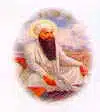 Guru Ram Das ji– He was born in 1534. Guru ji founded the city of Amritsar and started the construction of the famous Golden Temple at Amritsar, the holy city of the Sikhs. The temple remains open on all sides and at all times to every one. This indicates that the Sikhs believe in One God who has no partiality for any particular place, direction or time.
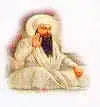 Guru Arjan Dev ji – He was born in 1563. He was the third son of Guru Ram Das ji. Guru Arjan was a saint and scholar of the highest quality and repute. He compiled the Adi Granth, the scriptures of the Sikhs, and wrote the Sukhmani Sahib. To make it a universal teaching, Guru ji included in it hymns of Muslim saints as well those of low-caste pariah saints who were never permitted to enter various temples. Guru Arjan Dev built Sri Darbar Sahib also known as Golden Temple in Amritsar.
Sri Darbar Sahib welcomes all without discrimination, which is symbolised by the four doors that are open in four directions. Guru ji became the first great martyr in Sikh history when Emperor Jahangir ordered execution.
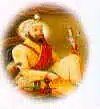 Guru Har Gobind ji – He was born in 1595. He was the son of Guru Arjan Dev ji.Known as a “soldier saint,” Guru Hargobind ji organised a small army, explaining that extreme non-violence would only encourage evil. Guru ji taught that it was necessary to take up the sword in order to protect the weak and the oppressed. Guru ji was first among Gurus to take
  up arms to defend the faith. At that time it was only emperors who were allowed to sit on a raised platform, called a takhat or throne. At the age of 13, Guru Hargobind erected Sri Akal Takhat Sahib, ten feet above the ground and adorned two swords, Miri and Piri, representing temporal and spiritual power.
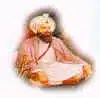 Guru Har Rai ji – He was born in 1630, spent most of his life in devotional meditation and preaching the teachings of Guru Nanak. Guru ji cautiously avoided conflict with Emperor Aurangzeb and devoted his efforts to missionary work. He also continued the grand task of nation building initiated by Guru Hargobind.
 Guru Har Krishan ji – He was born in 1656. Guru Har Krishan was the youngest of the Gurus. Installed as Guru at the age of five, Guru ji astonished the Brahmin Pundits with his knowledge and spiritual powers. To the Sikhs he proved to be the symbols of service, purity and truth. The Guru gave his life while serving and healing the epidemic-stricken people in Delhi. Anyone who invokes Him with a pure heart has no difficulties whatsoever in their life.
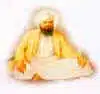 Guru Tej Bahadur ji – He was born in 1621 in Amritsar. He established the town of Anandpur. The Guru laid down his life for the protection of Hindus, their Tilak (devotional mark painted on the forehead) and their sacred thread. He was a firm believer in the right of people to the freedom of worship. It was for this cause that he faced martyrdom for the defence of the down-trodden Hindus. So pathetic was the torture of Guru Tegh Bahadur that his body had to be cremated in secret at Delhi while his head was taken four hundred kilometers away to Anandpur Sahib for cremation.
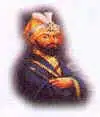 Guru Gobind Singh ji– He was born in 1666 and became Guru after the martyrdom of his father Guru Tegh Bahadur. He fought many wars against Aurangzeb’s forces. Thus the tree whose seed was planted by Guru Nanak, came to fruition when Guru Gobind Singh created the Khalsa (The Pure Ones) , and on 3 October 1708, appointed Guru Granth Sahib as the Guru. He commanded: “Let all bow before my successor, Guru Granth. The Word is the Guru now.”
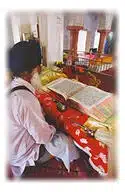 Guru Granth Sahib ji – Guru Granth Sahib ji (also known as the Adi Granth) is the scripture of the Sikhs. No Sikh ceremony is regarded as complete unless it is performed in the presence of Guru Granth Sahib. The Granth was written in Gurmukhi script and it contains the actual words and verses as uttered by the Sikh Gurus. It is considered the Supreme Spiritual Authority and Head of the Sikh religion, rather than any living person.
It is also the only scripture of it’s kind which not only contains the works of it’s own religious founders but also writings of people from other faiths. Guru Granth Sahib ji is held in great reverence by Sikhs and treated with the utmost respect. The greatness of Guru Granth Sahib ji lies not only in its being the Holy Scripture of the Sikhs; but also in it being a general scripture available to mankind, intended for everybody, everywhere.
MOOL MANTRA OF SIKHS

Ek O-Unkar
There is one God

Sat Naam
Truth is his name

Karta Purkh
He is the Creator

Nir Bhau
He is Without Fear

Nir Vair
He is Without Hate

Akaal Moorat
He is immortal/ Without Form

Ajuni Saibhang
He is beyond Birth and Death, Self-Existent

Gur Parsad
He is realised by Satguru’s Grace

Jap
Meditate on His Name

Aad Sach
He was True in the Timeless Beginning

Jugaad Sach
He was True when Ages Began

Hai Bi Sach
He is True Now

Nanak Hosi Bi Sach
Sayth Nanak, He will be Evermore True
Leave a comment