

Makar Sankranti marks the end of cold winter days and beginning of warm and longer days for the harvest season.
WHEN IS MAKAR SANKRANTI CELEBRATED?
This festival is celebrated on 14th of January in the month of Magha when the sun passes through the winter solstice, from the Tropic of Cancer to the Tropic of Capricorn. According to the Hindu astronomy the sun enters the rashi (zodiac) of Makar (Capricorn) and this is considered auspicious as it signifies afresh start. In other words sun travels from southern hemisphere to northern hemisphere; dakshinayan to Uttarayan.
WHY IS MAKAR SANKRANTI CELEBRATED?
Just like Lohri, Makara Sankranti is celebrated throughout India as a harvest festival. It is a way of giving thanks to the elements of nature for their precious crops. There are few legends associated with Makar Sankaranti.
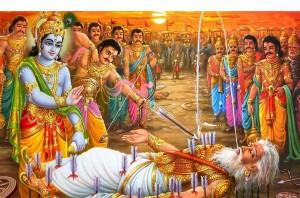 LEGEND 1 – As per Hindu mythology in the Kaurav and Pandav battle, Bhishma Pitamah’s (Devratha of Mahabharata), body was pierced all over by several arrows and he fell from his chariot but his body did not touch the earth rather rested on a bed of arrows which stuck out of his body. He couldn’t die at this time because by this time the sun had already crossed the equator to the southern hemisphere (Dakshinayan had started).
Bhishma pitamah had a boon that he could choose the time of his death so he had to wait 6 long months on the bed of arrows for an auspicious moment of death and that would be when the sun returns to the northern hemisphere (Uttarayan). So he chose Makar Sankranti, to go for his heavenly abode.
LEGEND 2 – The descent of Ganga – King Bhagiratha performed prayers to Brahmā for 1000 years, wanting to purify the souls of his ancestors but only river 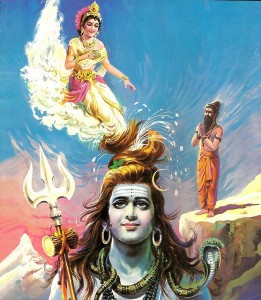 Gangacould do that by washing their ashes. For that Ganga had to be brought to earth from the heavens.
Brahmāji appeared and offers to send Ganga to earth but warns that her immense force of entry would destory earth. Brahmā thus asks Bhagiratha to appease Shivji for this challenging task. Bhagiratha prays to Shivji and finally Shivji agrees to break the force of Ganga’s entry in his matted hair. The legend says that on the auspicious day of Makar Sakranti, the thundering Ganga descended from himalayas and crashed on the head of Shivji who in return seizes all her energy through his matted hair, so that she can flow on earth and purify every soul.
HOW IS MAKAR SANKRANTI CELEBRATED?
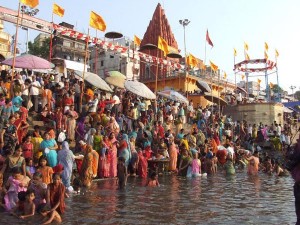 On Makar Sankranti, the Gayatri mantra is chanted and prayers are performed. Also on this day millions of people bathe in river Ganga. River Ganga originates at the Gomukh glacier in the Himalayas. From there, it descends to Gangotri crossing through Allahabad, Varanasi, and Kolkata before reaching the small island of Ganga Sagar where Ganga meets Sea in West Bengal.
On Makar Sankranti, a big fairs are held at Ganga Sagar, Kumbh Mela in Allahabad and millions of people bathe in the holy waters of Ganga.  This day also celebrates the famous Kite festival in Gujarat. On this beautiful day, millions of people fly colorful and vibrant kites on their roof tops. The sky is filled with a rainbow of kites.
COOL FACT
Hindu festival calendar is based on lunar months and it changes every year according to the phases of the moon. So all the dates for the Indian festivals changes every year except Makar Sankranti because it is the only Indian festival that is celebrated according to the solar calendar.
RECIPES OF MAKAR SANKRANTI – HARVEST FESTIVAL

Leave a comment